1927. Calik Village Is Founded
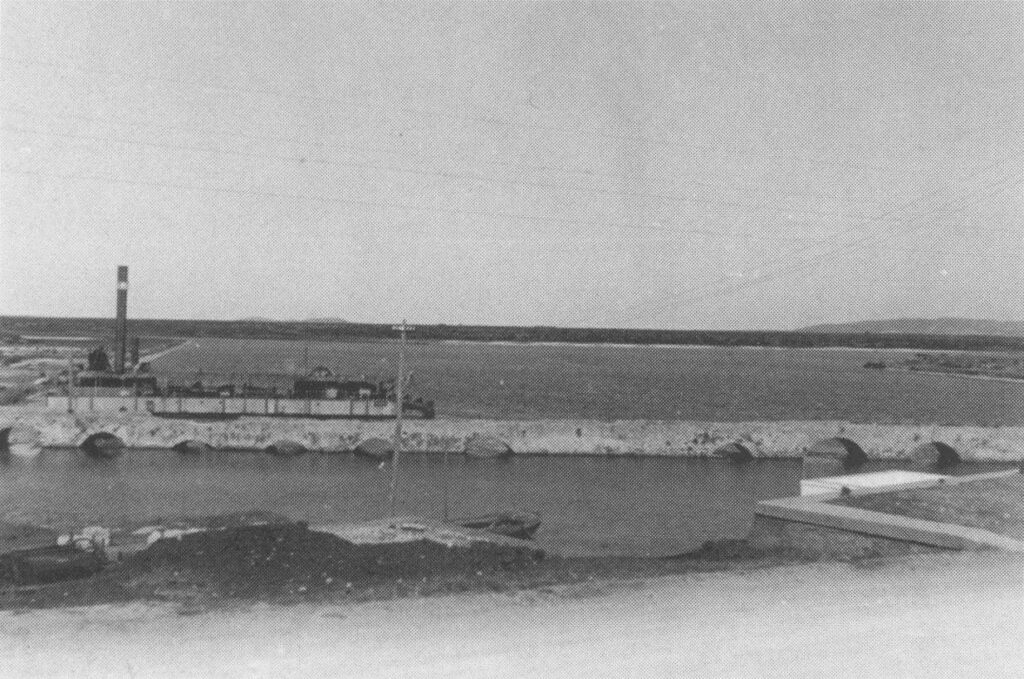
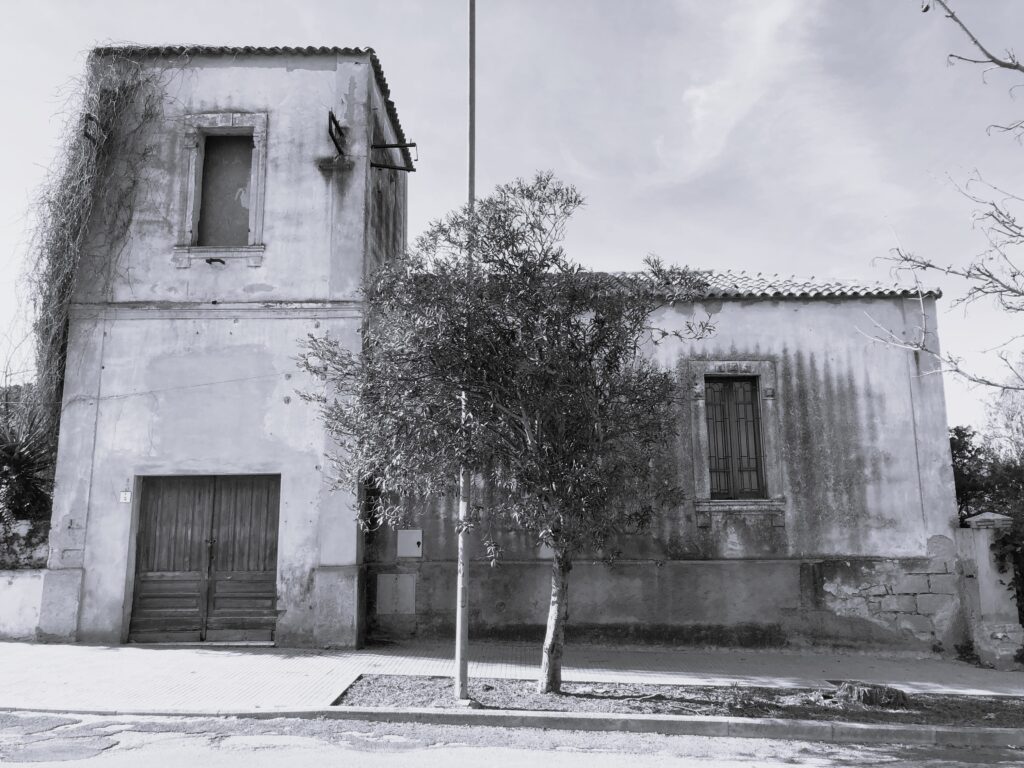
In 1927, based on a design by engineer Pierluigi Carloni, Calik Village was established to accommodate the workers employed in the reclamation of the lagoon.
Its simple and functional layout included the director’s villa, a guesthouse, an office building, a large dormitory, several residential units, a bread oven with an adjoining water-storage tank, a building used to store coal for the Regia Draga Sassari dredger, and an electrical substation.
It was the first group of buildings constructed in the area where Fertilia would be founded a decade later.
To allow the large dredger to pass beyond the Roman Bridge, which had been built in the Middle Ages on the foundations of an ancient Roman bridge, it was decided to demolish one of its arches and rebuild it once the works had been completed.
However, it was most likely a flood that caused the southern section of the bridge to collapse into the water, making its reconstruction impossible.
1933. The Ferrarese Colonisation Authority Is Founded
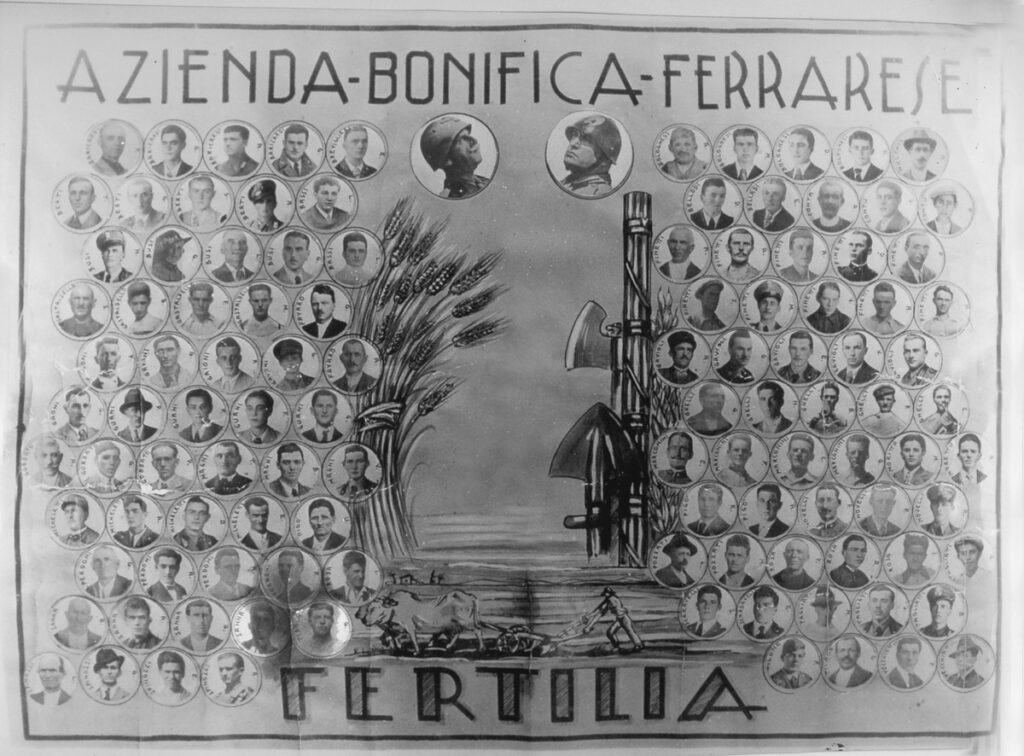
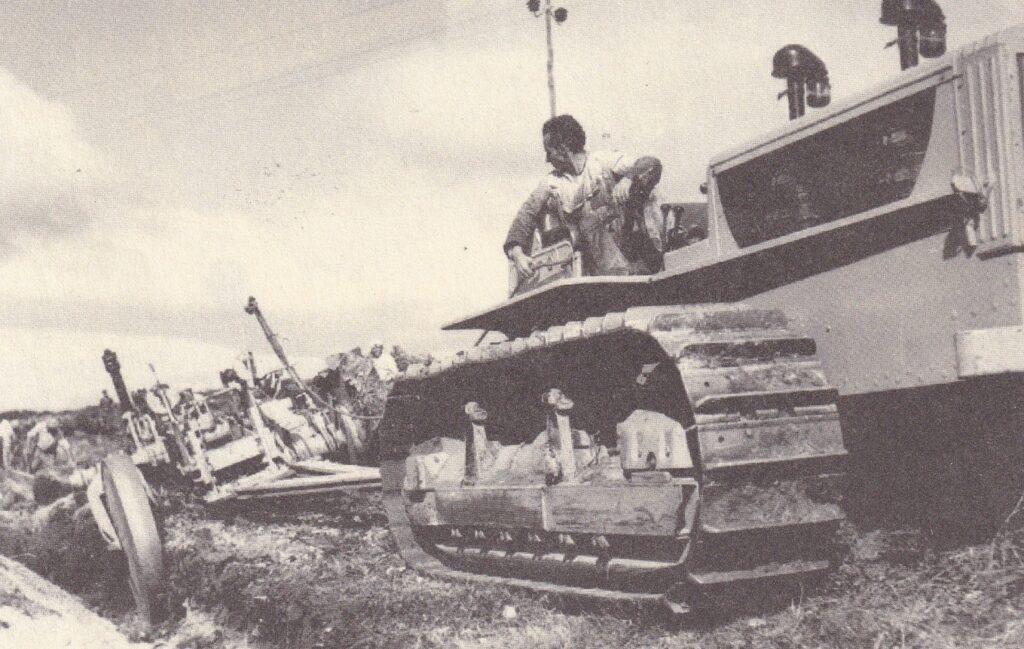
The Ferrarese Colonisation Authority, known as the EFC, was established in 1933 by the Italian Government, which appointed Mario Ascione from Sassari as its director. At the time, he was one of the leading figures in agricultural trade unionism.
It was Ascione who promoted the arrival in Sardinia of settlers from the Polesine area, who were employed in the reclamation of the Nurra around Alghero, and later supported the foundation of Fertilia.
The new town was intended to become the seat of a municipality capable of providing the services required by the vast agricultural district. The entire area was to be equipped with an important road network and farmhouses that, once completed, would be assigned to the farming families who had worked on the reclamation.
“If you go to Sardinia, we will give you a house and a farm of your own,” these families were told.
When they arrived, however, they found very little of what had been promised. It took a long time before they obtained their farms and homes, for which they had to work extremely hard.
From Garden City to Planned Town
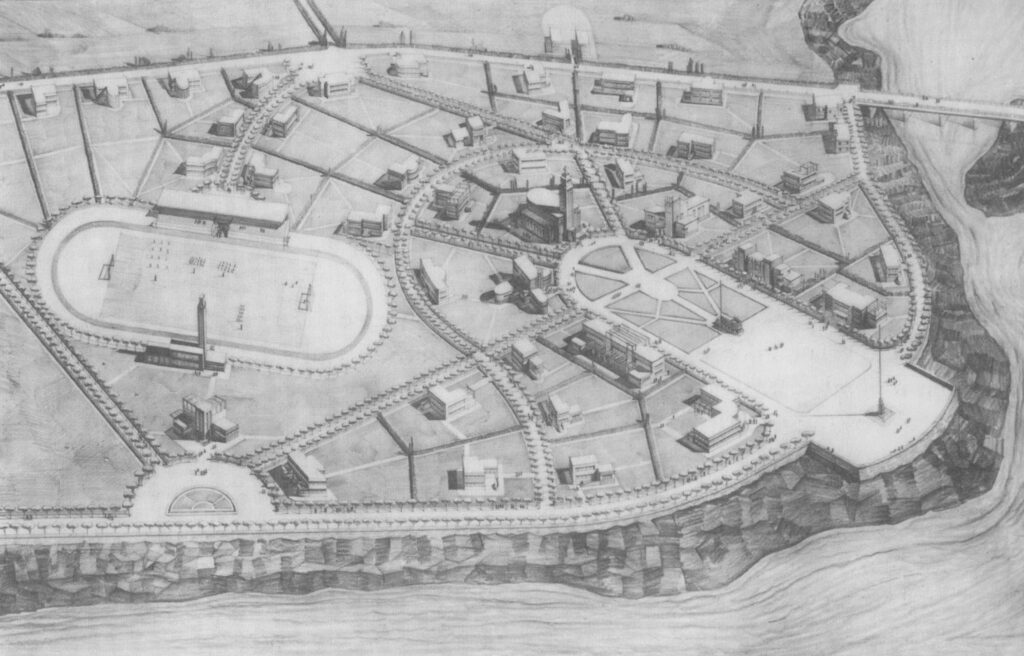
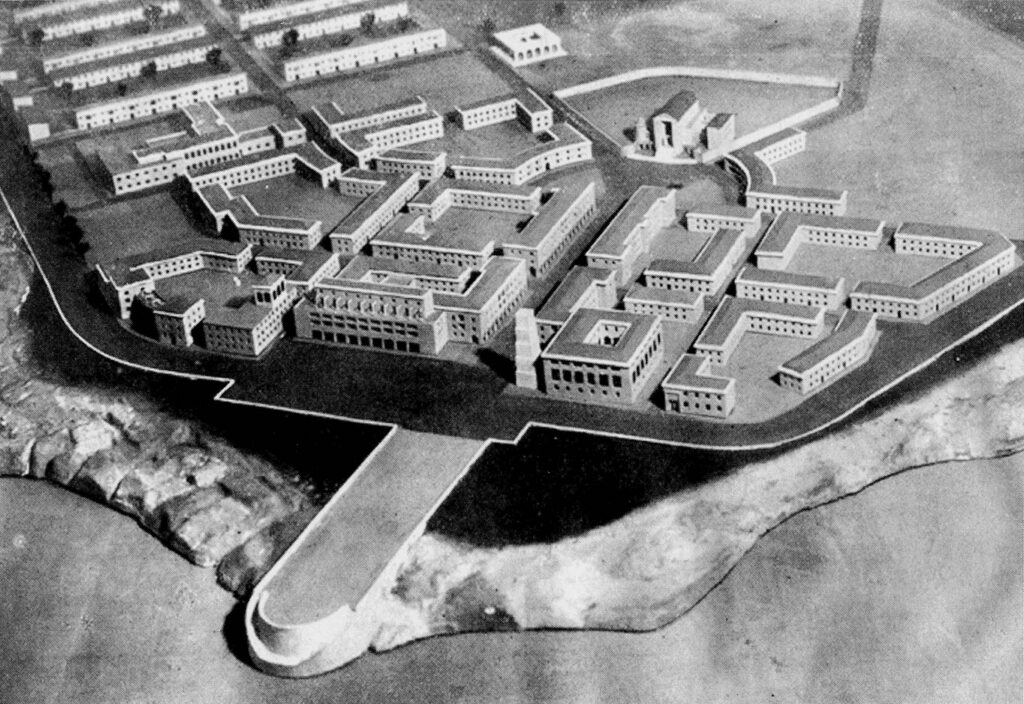
The first design for what was initially known as Borgo Calik was created by engineer Arturo Miraglia, but was rejected by Mario Ascione because it was considered too expensive.
The second project was entrusted to the 2PST group, formed by Paolini, Petrucci, Silenzi and Tufaroli, the same architects who had already designed Aprilia and Pomezia in the Pontine Marshes.
Reinforced concrete was replaced by local stone, with trachyte inserts and public buildings decorated with travertine.
The general layout, much of the road network, the large square overlooking the sea and the primary school building were retained from the original design.
8 March 1936. The Birth of Fertilia
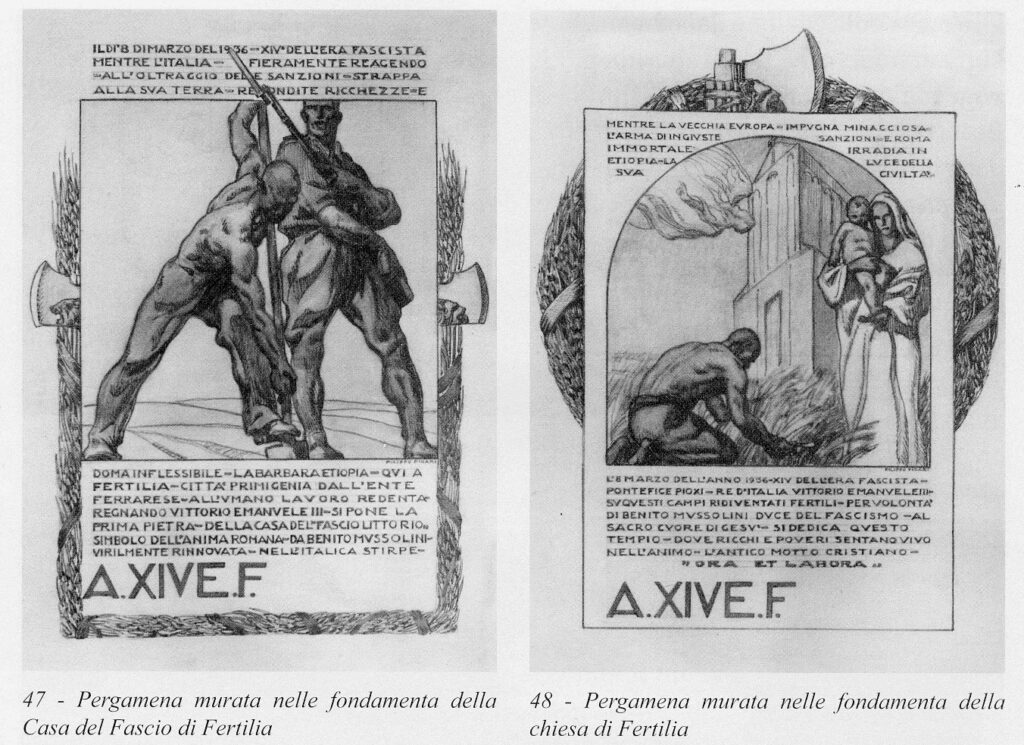
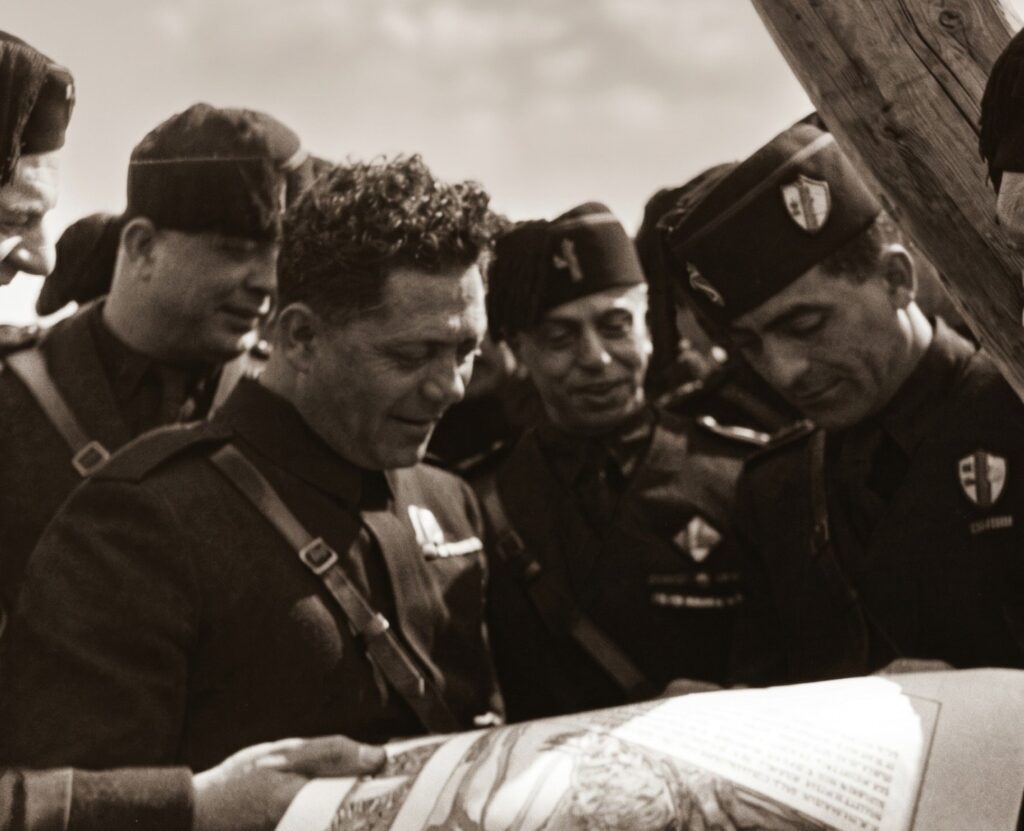
On Sunday, 8 March 1936, the foundation stone of the new town was laid in the presence of Undersecretary for Comprehensive Land Reclamation Canelli.
Two parchments, signed by Canelli and Mario Ascione, were sealed into the foundations of the church and the building intended to become the future town hall.
Ascione had promoted the foundation of the town and supervised the construction works.
The solemn celebrations were followed by a parade of agricultural vehicles and labourers, as well as the detonation of explosives used to clear and prepare the farmland.
The birth of the new town symbolised the triumph of human labour, which had succeeded in making fertile a hostile area once plagued by malaria.
1938. The Military Airport Is Established
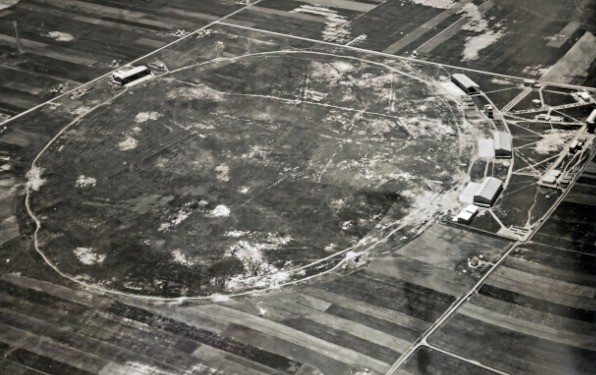
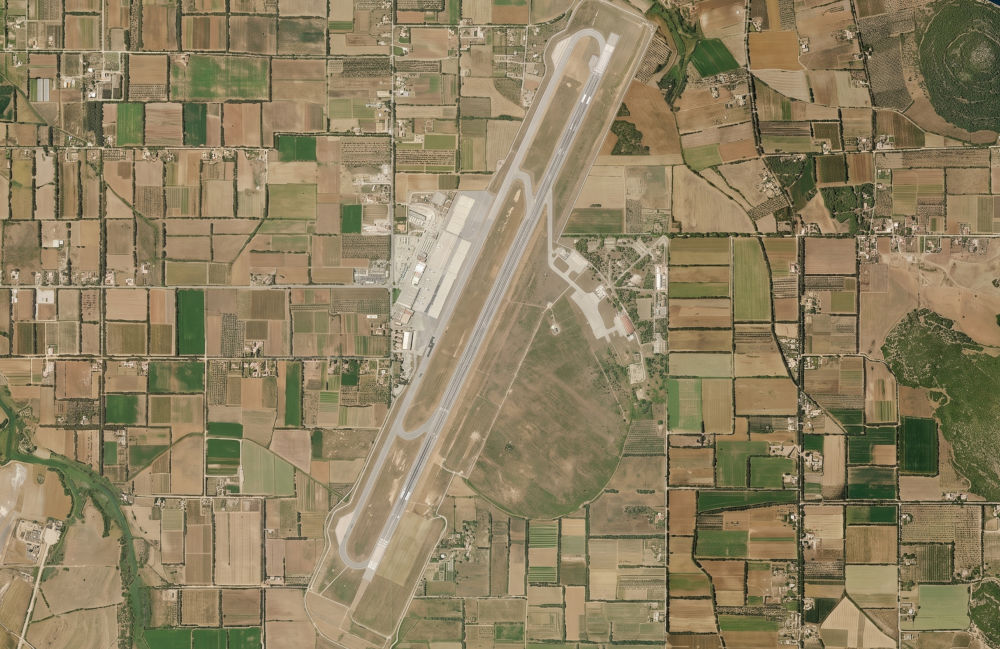
The outbreak of the Spanish Civil War made it necessary to construct an airport where aircraft departing from Rome and travelling towards the Iberian Peninsula could refuel.
Initially, an unpaved area with a flattened elliptical shape was created. Its outline can still be recognised in aerial photographs.
There was no actual runway: aircraft took off and landed according to the direction indicated by the windsock.
Only at the beginning of the war was a 600-metre compacted-earth runway constructed.
After the end of the conflict, a concrete runway was built. By the 1980s, it had reached a length of 2,800 metres, and in 1994 it was extended to its current length of 3,000 metres.
During the same period, its orientation was changed to 02/20, and the connecting taxiways and main taxiway were improved.
Antoine de Saint-Exupéry, the French writer to whom a museum in the Gulf of Porto Conte is dedicated, also took off from Alghero Airport.
June 1940. Italy Enters the War and Construction Ends
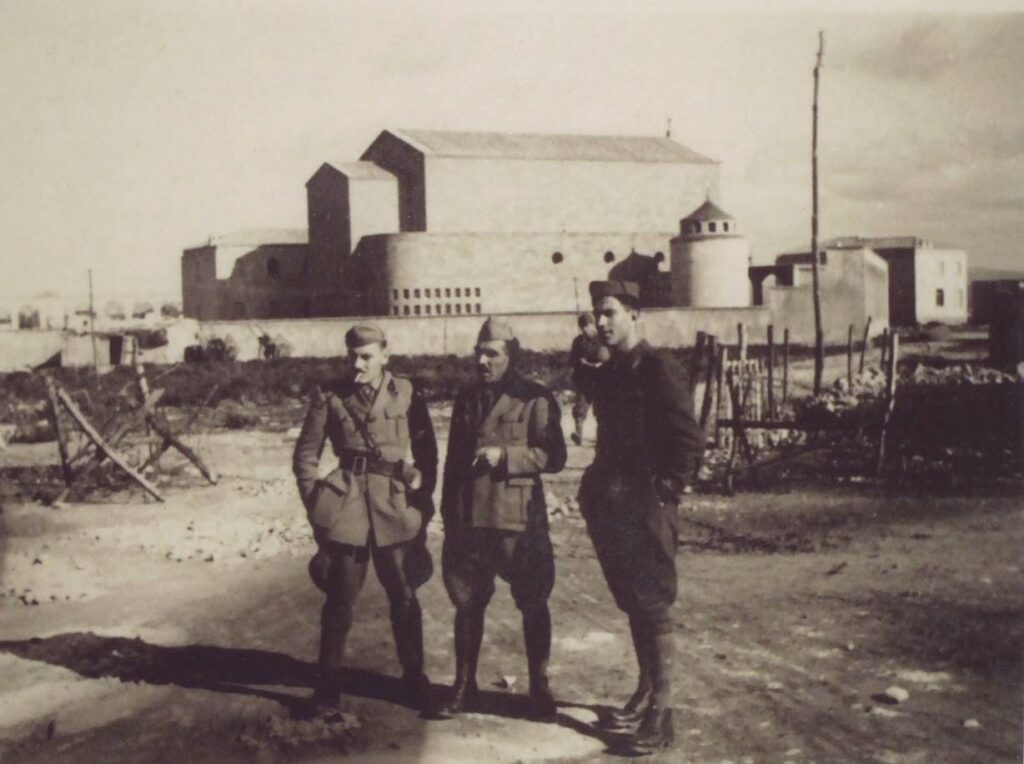
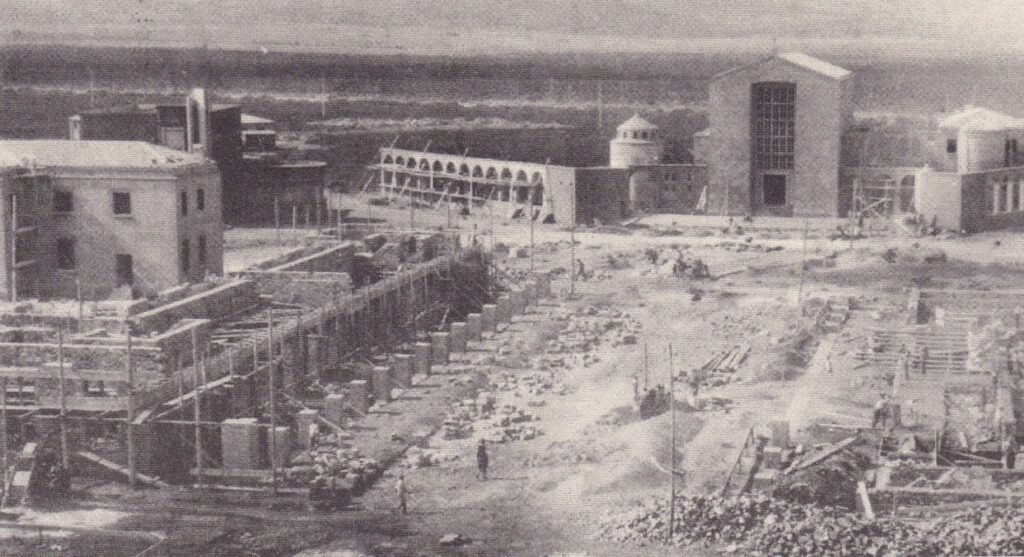
Italy’s entry into the Second World War on 10 June 1940 first caused construction work to slow down and later brought it to a complete halt.
From the beginning of 1942 until February 1947, Fertilia remained deserted.
The few existing buildings were still uninhabitable and lacked floors, partition walls, plasterwork and window frames.
A blanket of silence covered the entire area, where a shepherd named Bardino, together with his flock of sheep, was the only permanent resident.
The new town, whose name symbolically evoked fertility, appeared as a collection of stones and ghostly buildings.
The only photographs from that period show several French servicemen, including the writer Antoine de Saint-Exupéry, on the first floor of the parish house.
The building had probably already been completed and was being used by Allied servicemen as a canteen and resting place.
1946. Father Francesco Arrives in Fertilia on a Preliminary Mission
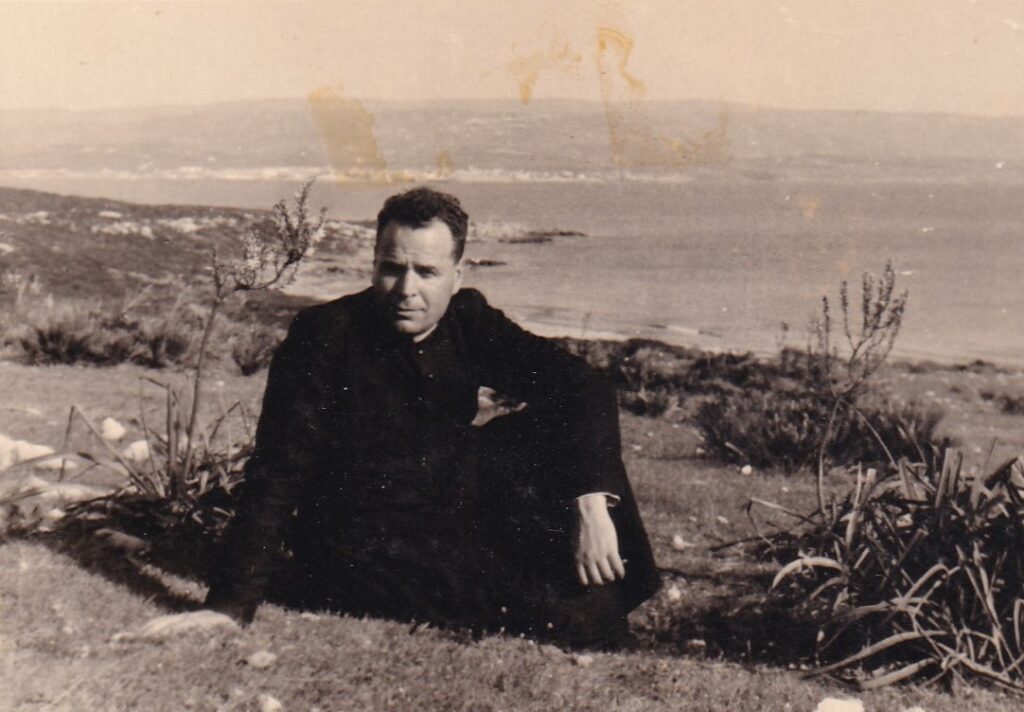
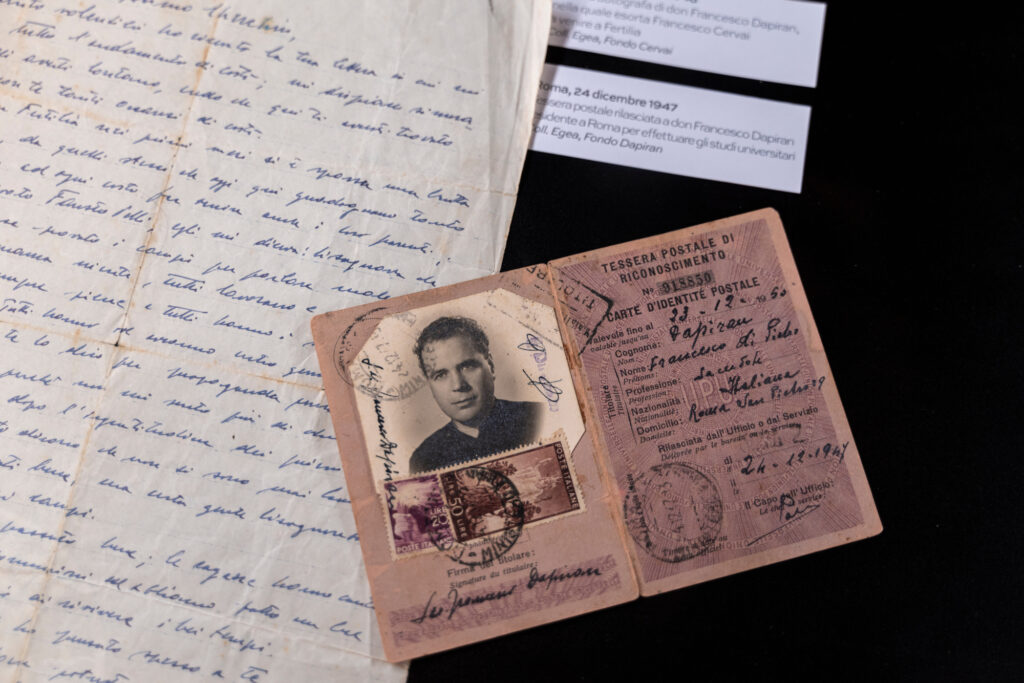
Father Francesco Dapiran was born in Rovigno in 1914 and became parish priest of Vrsar at the age of thirty.
He was forced to leave his homeland after being imprisoned in Yugoslav jails.
He witnessed the execution of Italians and supported mothers and wives during the recovery of bodies from the foibe, leaving behind harrowing accounts of those events.
He arrived in Fertilia on a preliminary mission in November 1946 and was immediately captivated by the rocky coastline and the sun setting over the sea to the west, just as it had in his native land.
He returned to Fertilia in the spring of 1947, and from that moment his new life began.
His goal was to create a new Pola in Sardinia by calling exiles from the many refugee camps scattered throughout Italy.
Determined, strong and sometimes uncompromising, Father Francesco served as parish priest and leader of the community for 45 years, until 1992.
He spent the final years of his life in Rovereto with his nephew Giuseppe Silvino.
1947. The Exiles Choose Fertilia
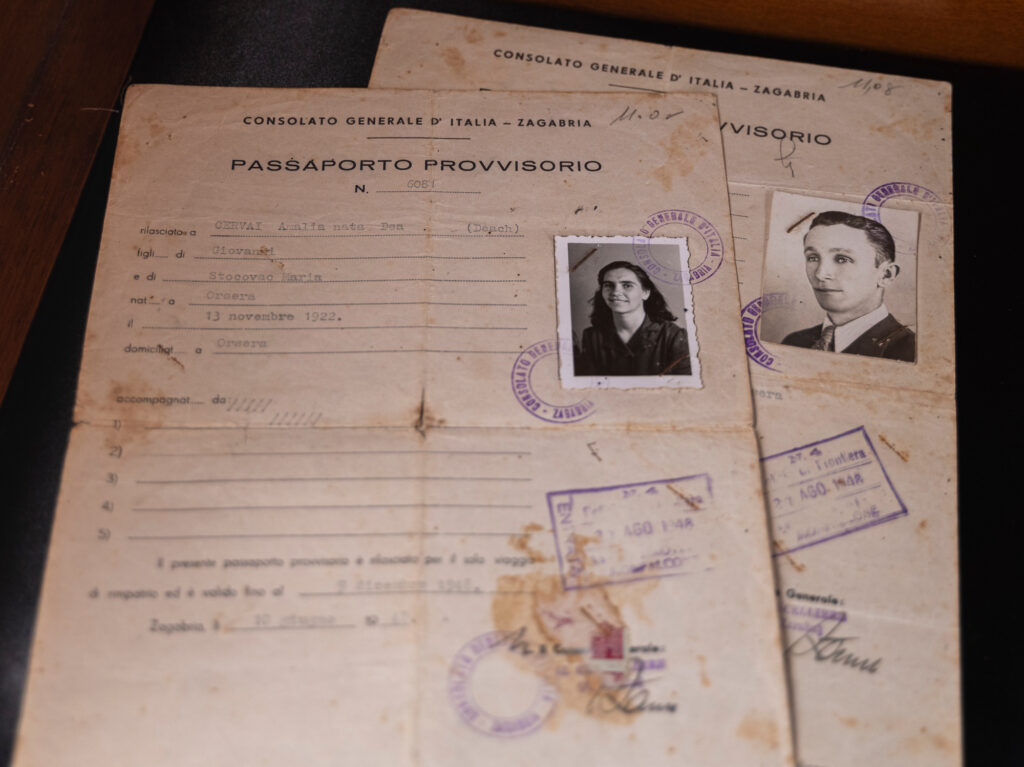
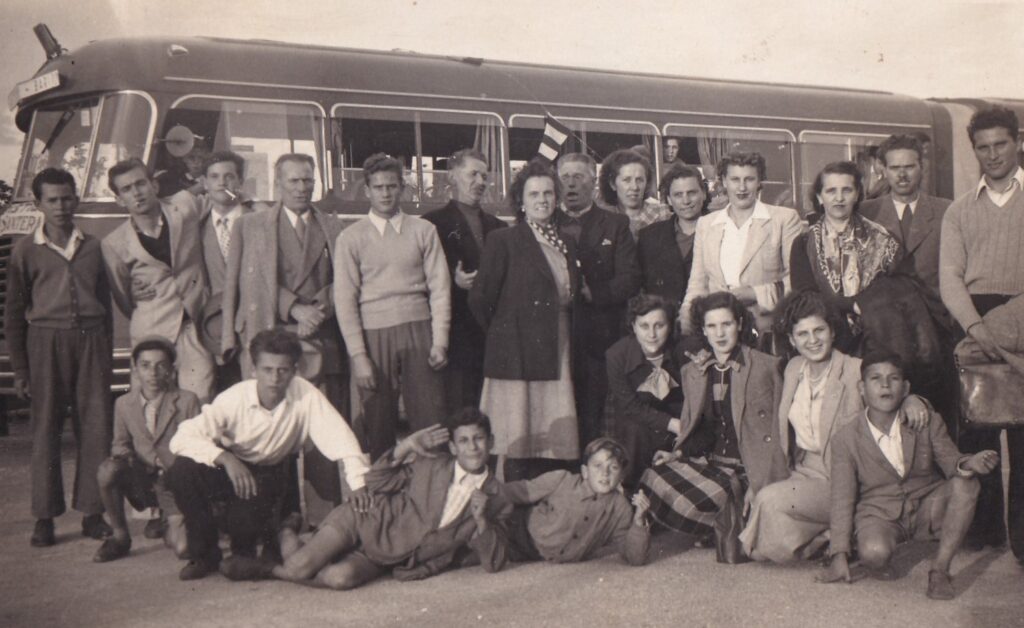
The first Julian-Dalmatian exiles began arriving in Fertilia on 6 February 1947.
Their arrival was recorded by Dr Matteo Guillot, president of the Municipal Assistance Authority, who initially welcomed them at the Civil Hospital of Alghero while accommodation in Fertilia was being completed.
After a long train journey to Civitavecchia, these families crossed the Tyrrhenian Sea aboard steamships.
From Olbia, they continued by train to Sassari, where a coach was waiting to take them to Alghero.
To reach Fertilia, they had to find an available cart or walk along a long path through an almost completely uninhabited landscape.
At the end of the journey, they found a town that must have appeared isolated, barren and full of rubble.
Particularly memorable was the voyage undertaken by thirteen old fishing boats carrying 53 families of Istrian fishermen.
After leaving Chioggia, they sailed around the Italian Peninsula and reached Fertilia in the spring of 1948, bringing their working equipment with them.
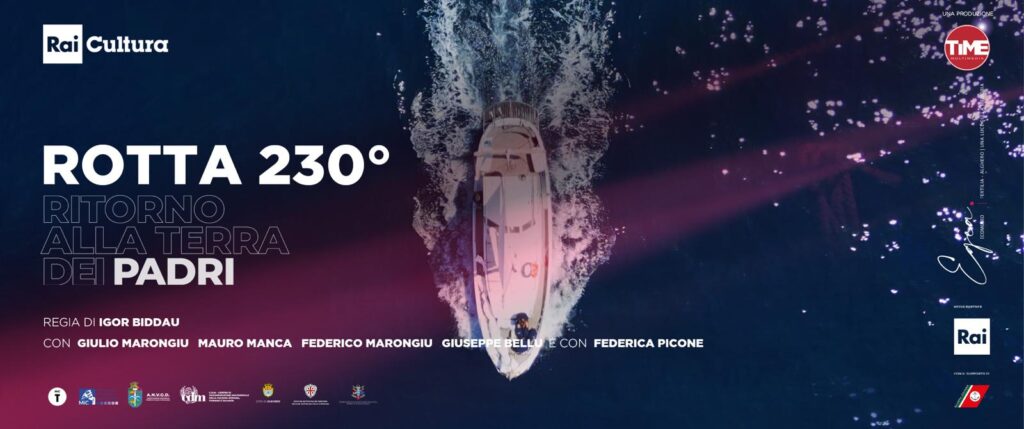
An extraordinary journey back in time, retracing the route sailed by 13 fishing boats carrying 53 families of exiles from Istria, Fiume, and Dalmatia, who reached Fertilia, in Sardinia, after 20 days and 20 nights of navigation along the coasts of our peninsula.
The Town Finally Takes Shape
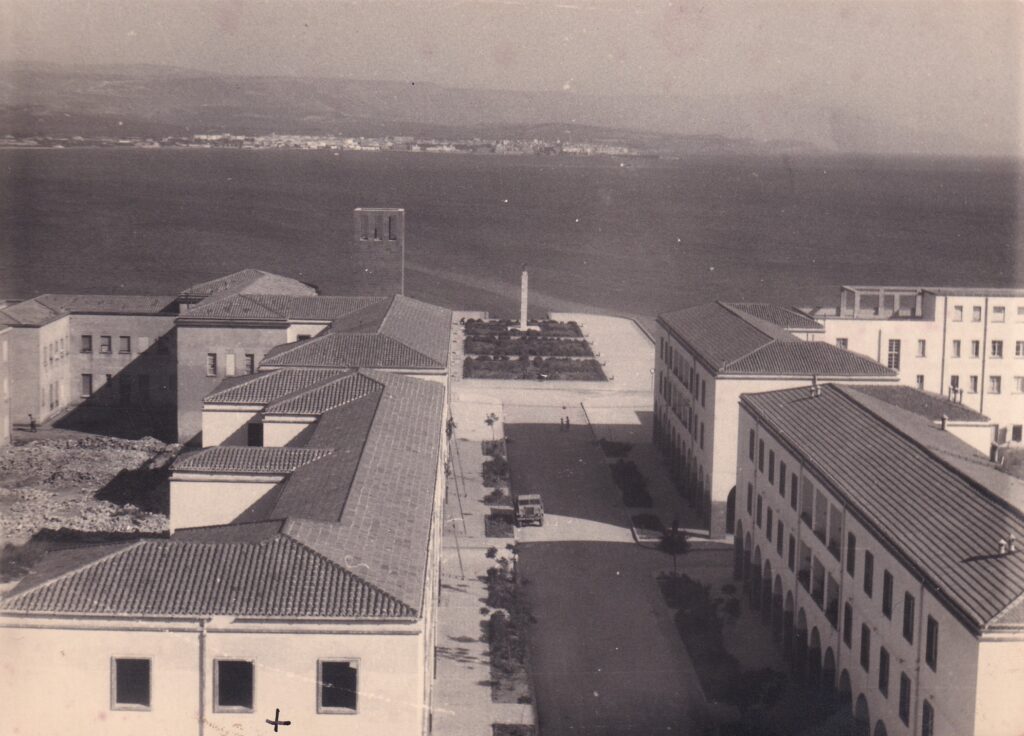
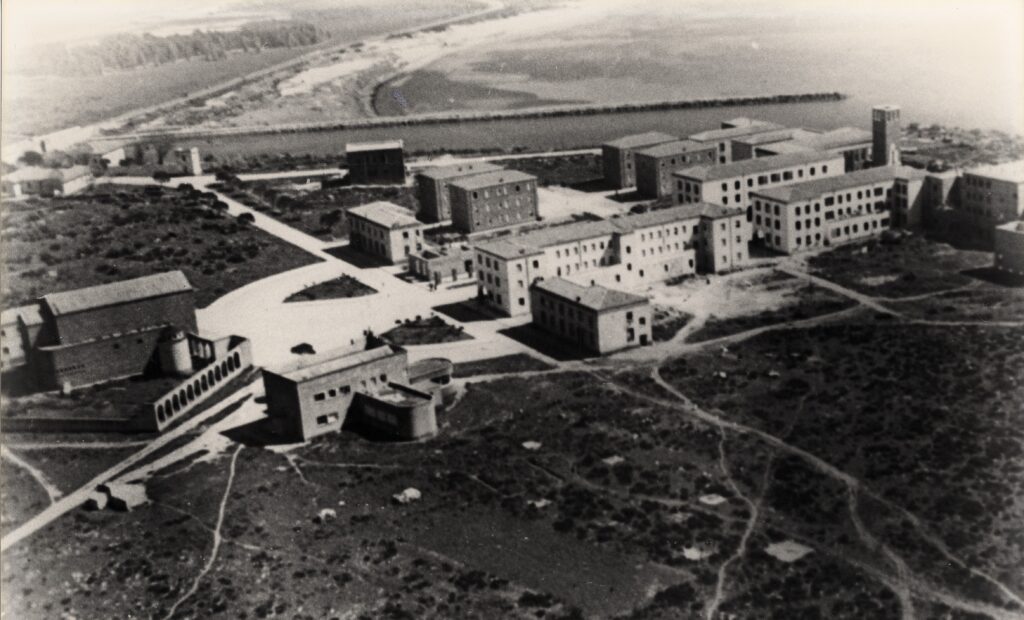
After the first extremely difficult years, Fertilia began to grow and gradually acquired the appearance envisioned by its designers.
It was an austere town, yet unique in Sardinia.
The large portico connected Piazza San Marco with the church, transforming the area into a genuine public gathering place.
The community itself was equally distinctive: poor, humble and vulnerable, but rich in values and humanity.
Despite deep cultural differences and diverse origins, the residents came together as one.
During those difficult years, however, the association between Rationalist architecture and the Fascist regime that had adopted it contributed to turning Fertilia into a kind of non-place.
None of the public authorities that later owned Fertilia’s buildings made a real effort to keep them in good condition.
Over time, many public buildings inevitably deteriorated into crumbling ruins.
One Community, One Family
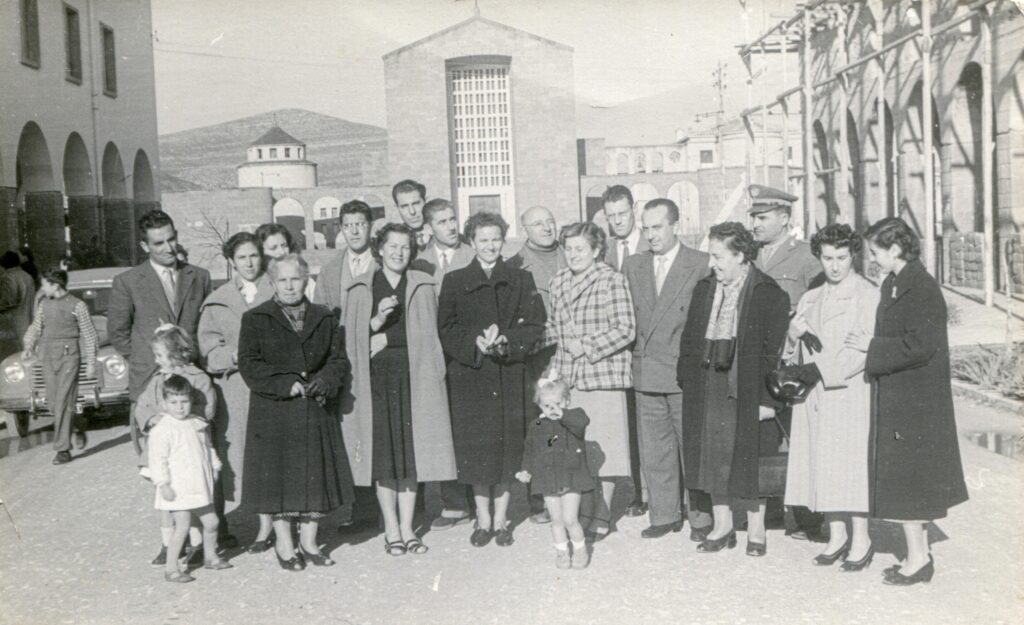
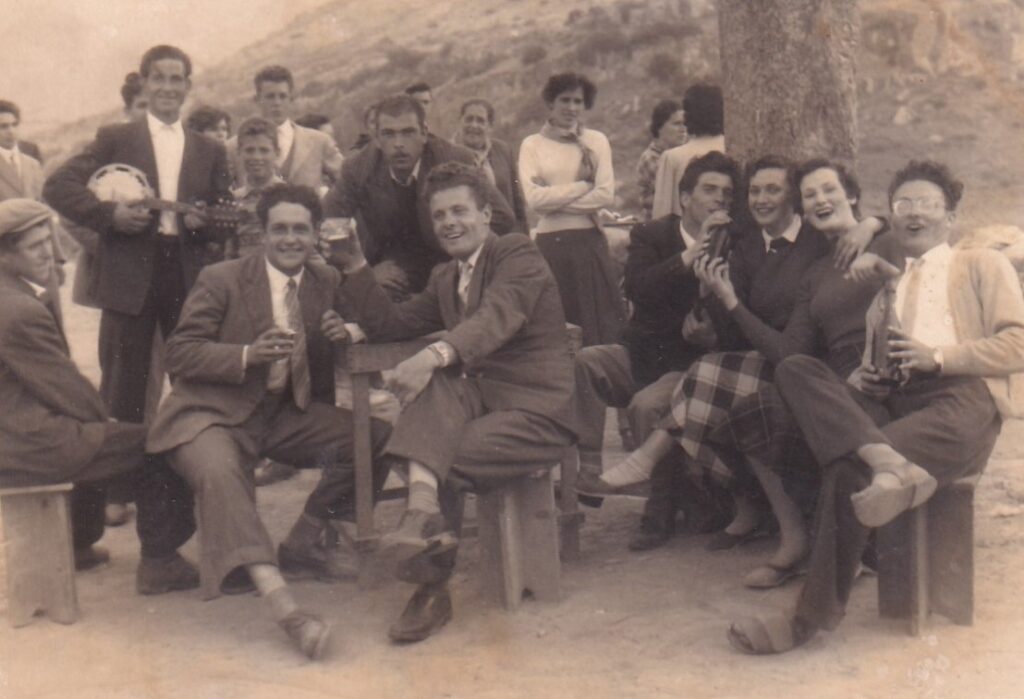
For many years, Fertilia’s community was like one large and joyful family.
Almost everyone living in the small town near Alghero needed to recover something that history had taken away from them.
Their deceased relatives had remained far away in their places of origin.
This was true for the exiles from Istria, Fiume and Dalmatia, but also for the farmers from Ferrara and the Veneto and for the Italian returnees who arrived several years later from the North African colonies, Corsica, Romania and the island of Rhodes.
It was a cheerful and happy family because almost everyone had chosen to forget the past.
It was the only way to survive the pain and profound humiliation they had suffered and to allow their children to grow up without carrying the burden of such a difficult past.
The Town Grows with the UNRRA-CASAS Housing
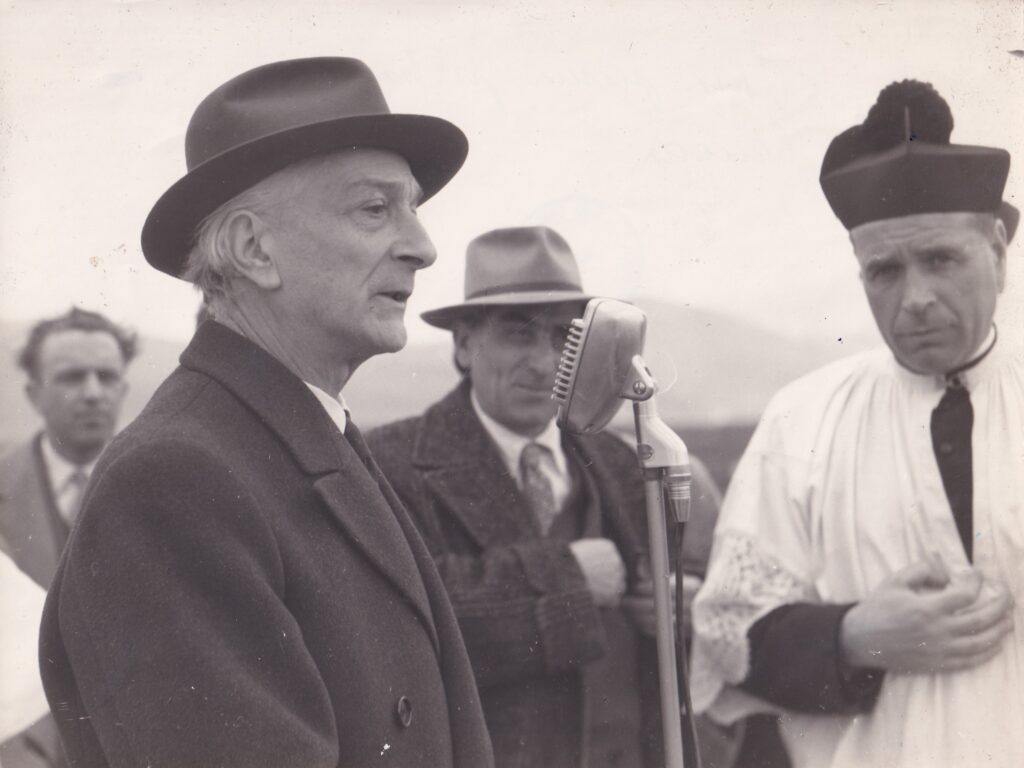
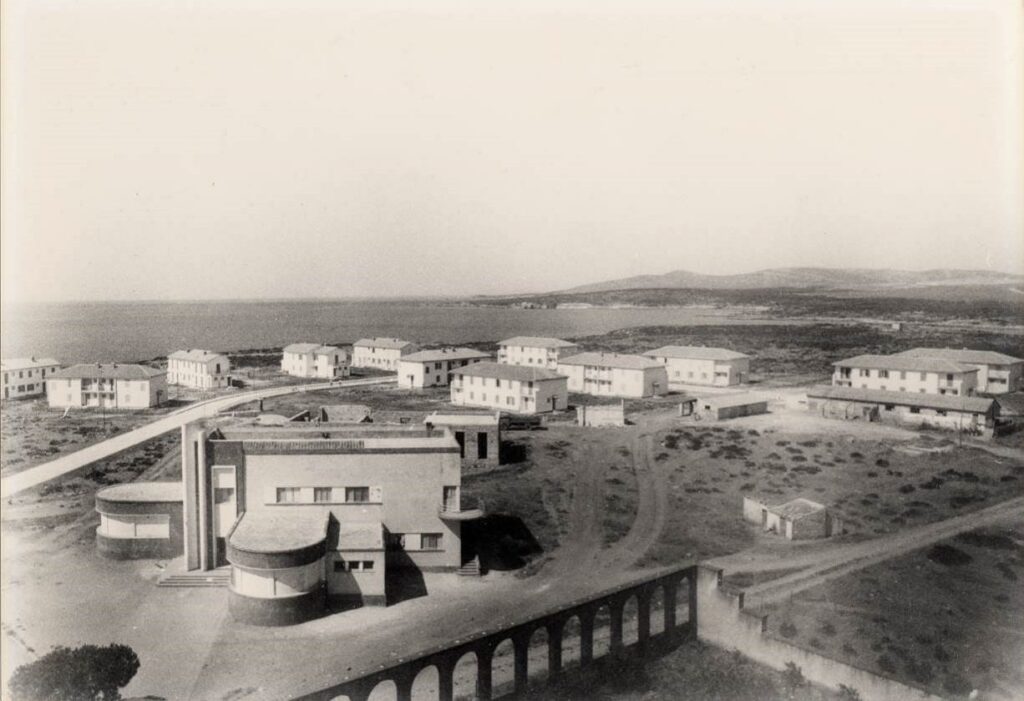
Beginning in the early 1950s, twelve UNRRA-CASAS apartment buildings were constructed using funds provided through the Marshall Plan.
The homes were offered under a rent-to-own arrangement to families willing to pay an amount that, particularly during the early years, represented a significant financial commitment.
Each building contained four apartments, each with an independent entrance and a small garden.
This project provided an effective response to the housing needs of local families without profoundly altering the character of the town.
It was very different from the large-scale social housing developments built many years later.
1955. Fertilia Displays Its Identity
By the mid-1950s, Fertilia had consolidated its urban and social structure.
At Father Francesco’s initiative, the symbols that would represent the cultural identity of the community were created.
Construction began on the Venetian-style bell tower, and the monument bearing the Lion of Saint Mark was erected.
The monument communicated to everyone arriving from the sea that, in this corner of Sardinia, there lived a community whose roots were connected to the cultural heritage of the Republic of Venice.
It was rather like placing one’s family name on the front door of a home.
Inside the church dedicated to Saint Mark, in addition to the magnificent mosaic by the Sassari artist Giuseppe Biasi, specially commissioned furnishings by the ceramic artist Giuseppe Silecchia were installed.
Silecchia was also the creator of the Lion of Saint Mark.
Fertilia could therefore proudly display what would become the symbols of the entire community, without excluding anyone.
In the years that followed, these symbols would represent not only the community’s Adriatic origins, but also a town of inclusion in which hospitality had become a defining characteristic.
The Metaphysical Town
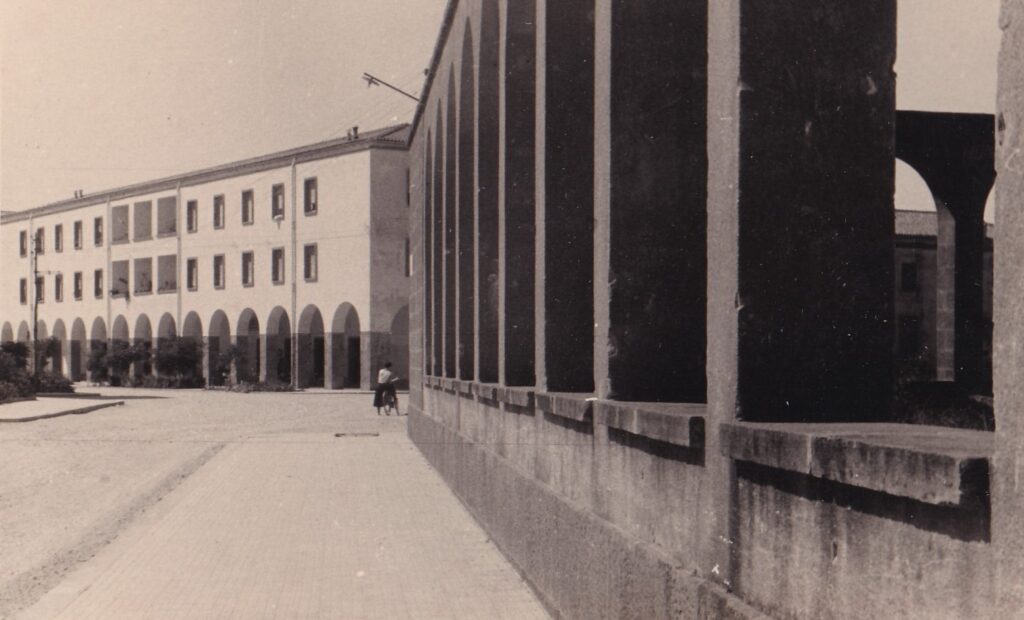
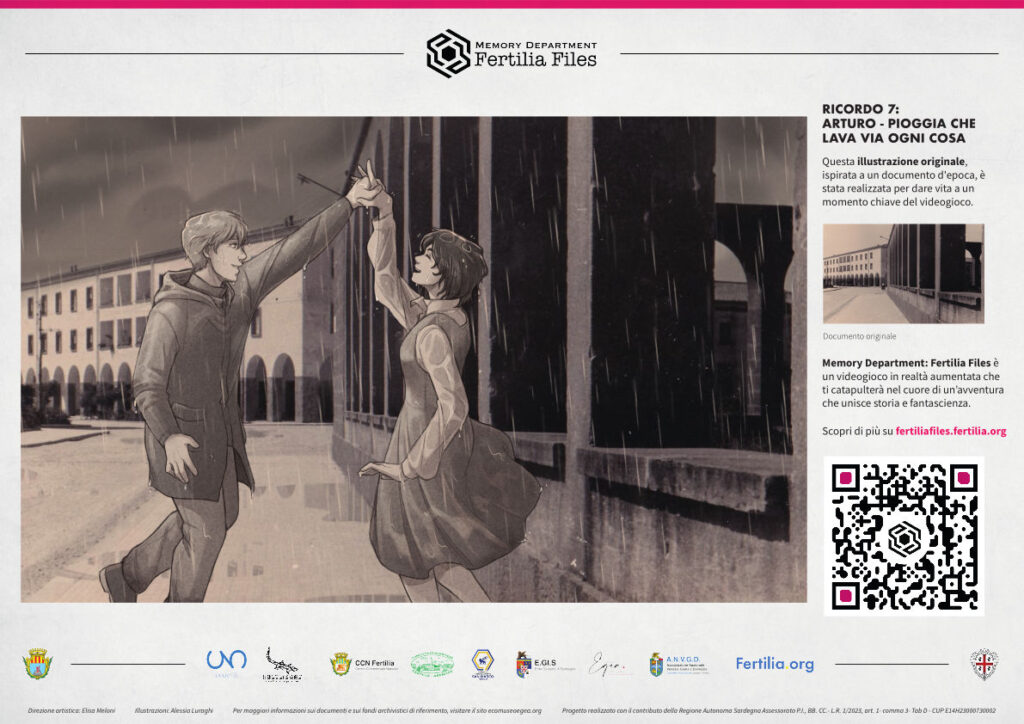
Fertilia’s atmosphere, with its porticoes and essential architectural lines, strongly recalls the relationship between Rationalist architecture and Metaphysical painting found in other planned towns such as Sabaudia and Tresigallo.
In Giorgio de Chirico’s paintings, the city is not a real place but a suspended mental space where time seems to stop and ordinary objects acquire an enigmatic and mysterious meaning.
In the 1950s, Fertilia seemed to correspond exactly to this description.
It appeared as an ideal place, completely detached from the wider Sardinian context and suspended in a time that, for some, belonged to the past.
It represented a return to normal life after years of exile and time spent in refugee camps.
For others, it represented the future: the abandonment of the harsh life of the countryside and the beginning of a new cycle.
For everyone, Fertilia became a new home where the boundaries between family and community became increasingly blurred.
The video game Fertilia Files, created to introduce younger generations to the history of Fertilia through play, drew inspiration from these distinctive architectural elements, which help make Fertilia an ideal town.
Modern Women
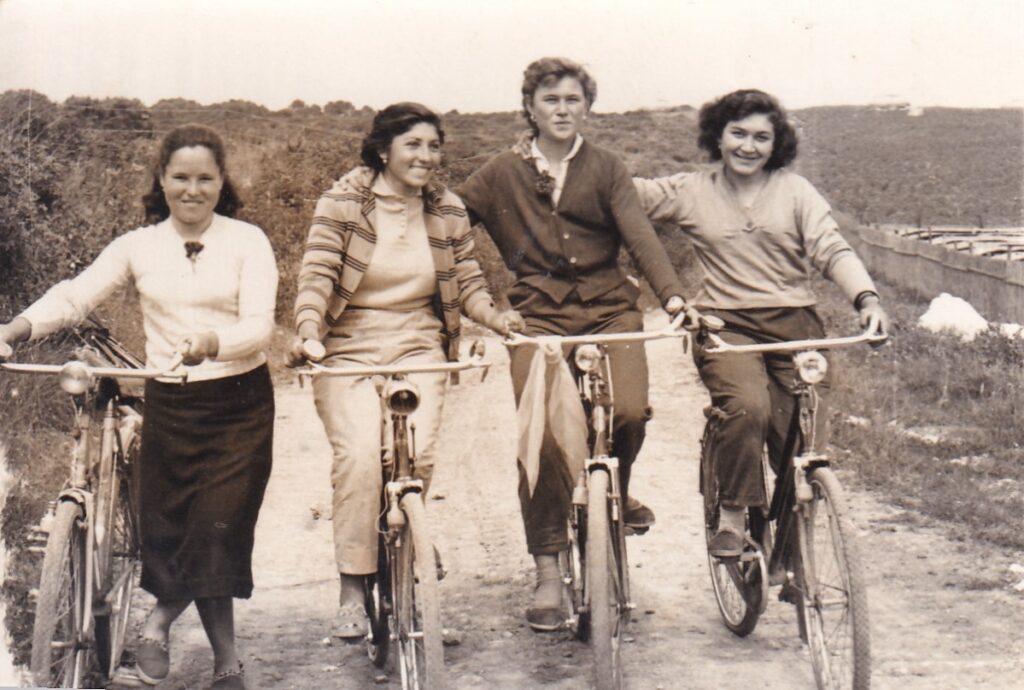
The emancipation of Fertilia’s women, whether from Ferrara, the Veneto or the Julian territories, caused genuine scandal during the first years after their arrival in Sardinia.
At the time, Sardinian culture viewed women as austere figures, almost always dressed in long skirts, often wearing a veil and mainly devoted to domestic work and caring for the family.
Seeing the young women of Fertilia riding bicycles, sometimes in skirts that revealed their legs, was considered completely unacceptable.
Women from north-eastern Italy smoked cigarettes, visited taverns with men, danced and sang during the many community celebrations.
They were also accustomed to going to the beach in swimsuits at a time when many Sardinian women still entered the sea wearing long skirts.
It was a genuine cultural revolution that took many years to be understood and accepted.
Their emancipation did not prevent them from becoming loving wives and devoted mothers, capable of passing on the value of family and preserving their traditions, including through the typical dishes they had learned from their own mothers.
Caring Mothers and Hard Workers
During the most difficult periods, women played the most important role.
They kept families united, raised their children without passing on the burden of the tragedies they had experienced, cared for their homes and worked hard to meet the financial needs of families that had lost everything.
Fertilia was officially inaugurated on International Women’s Day, a symbol of fertility.
It almost seemed like an early tribute to the women who would become the true protagonists of the town’s rebirth.
That rebirth coincided with the meeting and blending of traditions, songs, foods and cultures that, often thanks to women, were passed on to future generations.
A Multicultural Youth
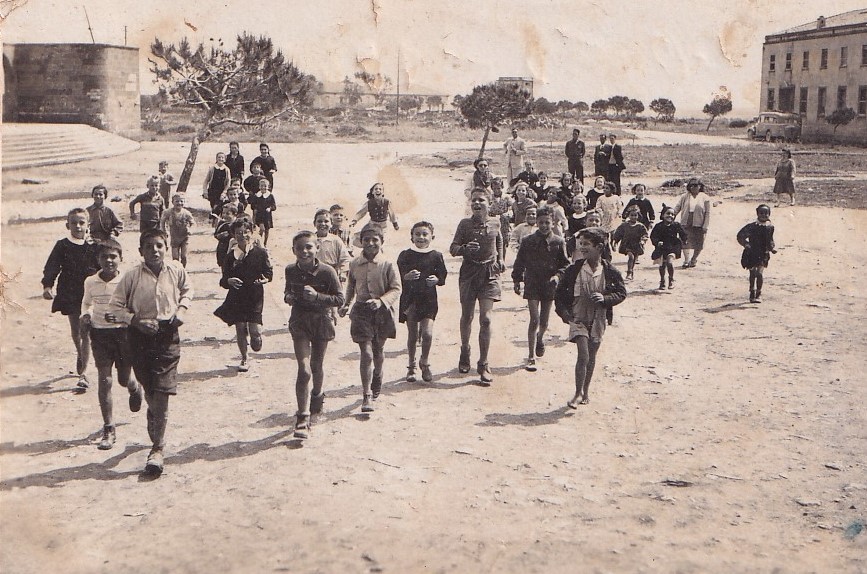
For many generations, childhood and youth in Fertilia were happy and carefree.
Without barriers and under the watchful eye of a community in which everyone played some form of parental role, a healthy environment developed, founded on the values of different communities and on integration between generations.
Growing up in Fertilia meant building human relationships that would last a lifetime.
Young people were pioneers in a vast and unspoilt territory.
They learned to understand it, protect it and allow themselves to be shaped by it, becoming part of an ecosystem in which human beings and nature represented two sides of the same reality.
It was a youth spent in the shade of great oak trees, symbolically represented by the women and men who, through circumstances beyond their control, had been forced to live like heroes.
Through their example, they passed their experience and values on to the younger generations.
Sport as a Way to Unite the Community
Sport, and football in particular, became the symbol of a multicultural community.
Everyone played on the same team: people from Alghero, Sardinians, children of exiles, people from Ferrara and the Veneto, Italian returnees from the former colonies and many members of the Air Force.
The team was always distinguished by its sporting fairness and the strong sense of harmony that transformed it into a family within Fertilia’s larger family.
Sport allowed many young people to grow up in a healthy way and learn how to live together.
Everyone played their part, contributing their time and effort for the benefit of the community.
The community itself represented the most important value to be protected and carefully nurtured.


