Calik Village and the Reclamation of the Lagoon
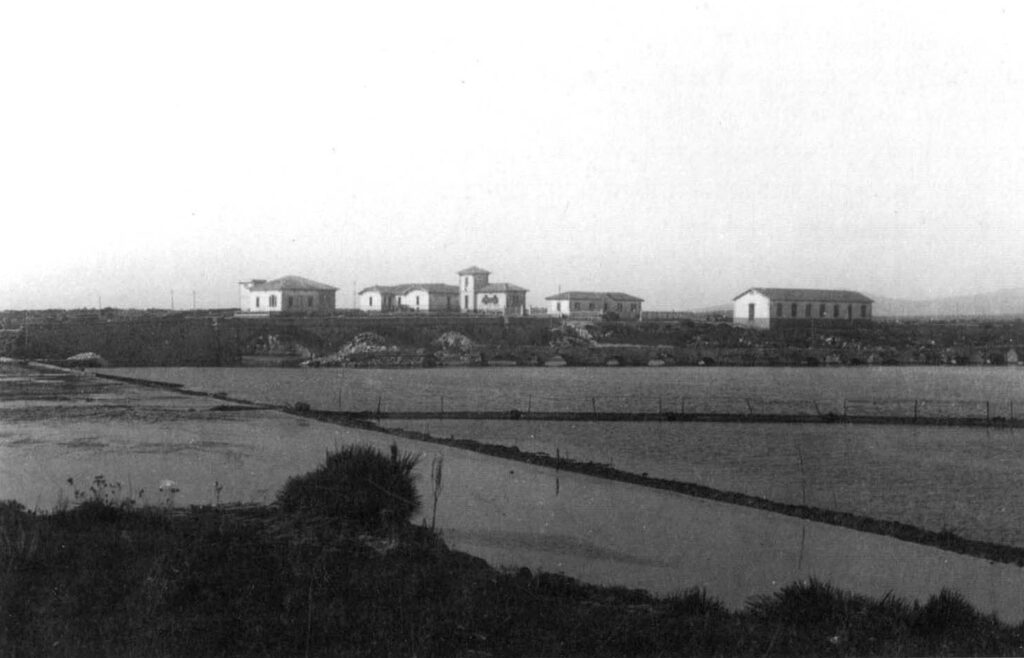
In 1927, based on a design by engineer Pierluigi Carloni, Calik Village was established to accommodate the workers employed in the reclamation of the lagoon.
Its simple and functional layout included the director’s villa, a guesthouse, an office building, a large dormitory, several residential units, a bread oven with an adjoining water-storage tank, a building used to store coal for the Regia Draga Sassari dredger, and an electrical substation.
It was the first group of buildings constructed in the area where Fertilia would be founded a decade later.
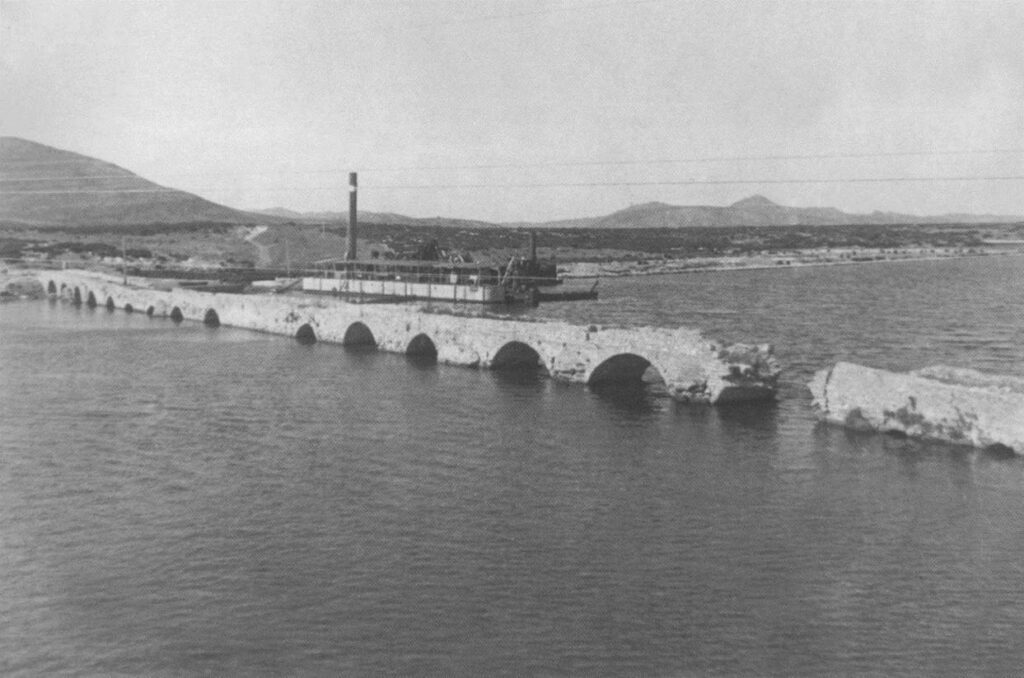
To allow the large dredger to pass beyond the Roman Bridge, which had been built in the Middle Ages on the foundations of an ancient Roman bridge, it was decided to demolish one of its arches and rebuild it once the works had been completed.
However, it was most likely a flood that caused the southern section of the bridge to collapse into the water, making its reconstruction impossible.
The Ferrarese Colonisation Authority
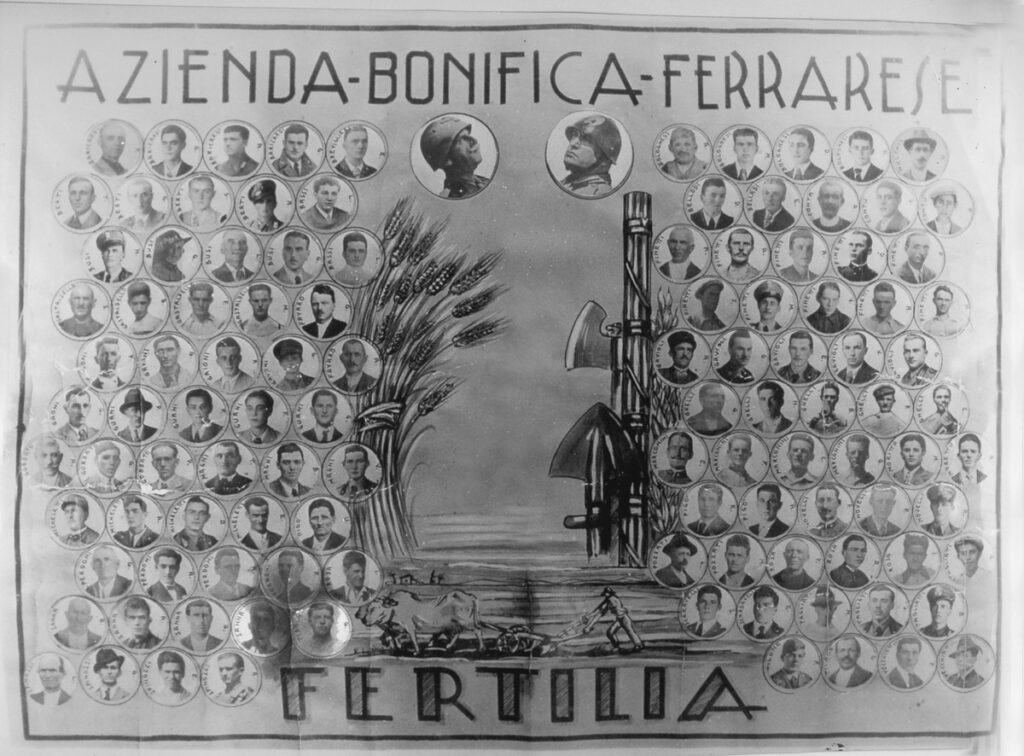
In 1933, the Ferrarese Colonisation Authority was established and placed under the leadership of Mario Ascione, a native of Sassari and one of Italy’s leading representatives of agricultural trade unionism at the time.
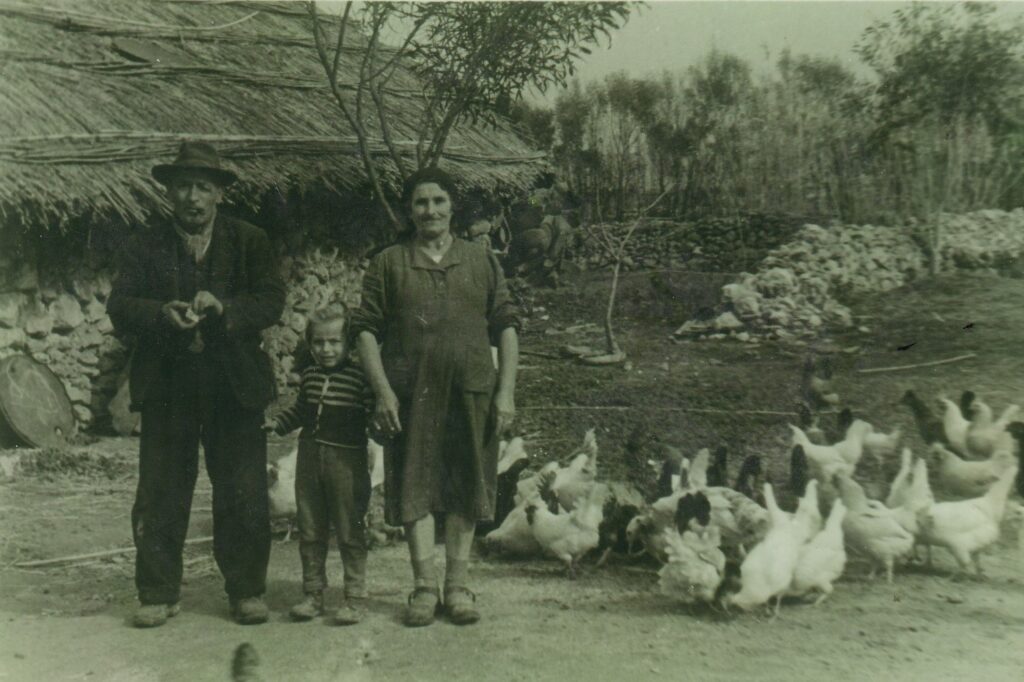
It was Ascione who promoted the arrival in the Nurra area of Alghero of numerous farming families from the province of Ferrara and the Veneto region. They were involved in an extensive programme of comprehensive land reclamation across an uncultivated plain affected by malaria.
Thanks to these settlers, who brought with them the experience and culture of their native lands, the Nurra was transformed into a fertile plain where numerous farms were established for the cultivation of wheat and vines and the raising of livestock.
The Veneto-Ferrarese community brought about a genuine social revolution, both through its work culture and through the traditions it introduced into the area.
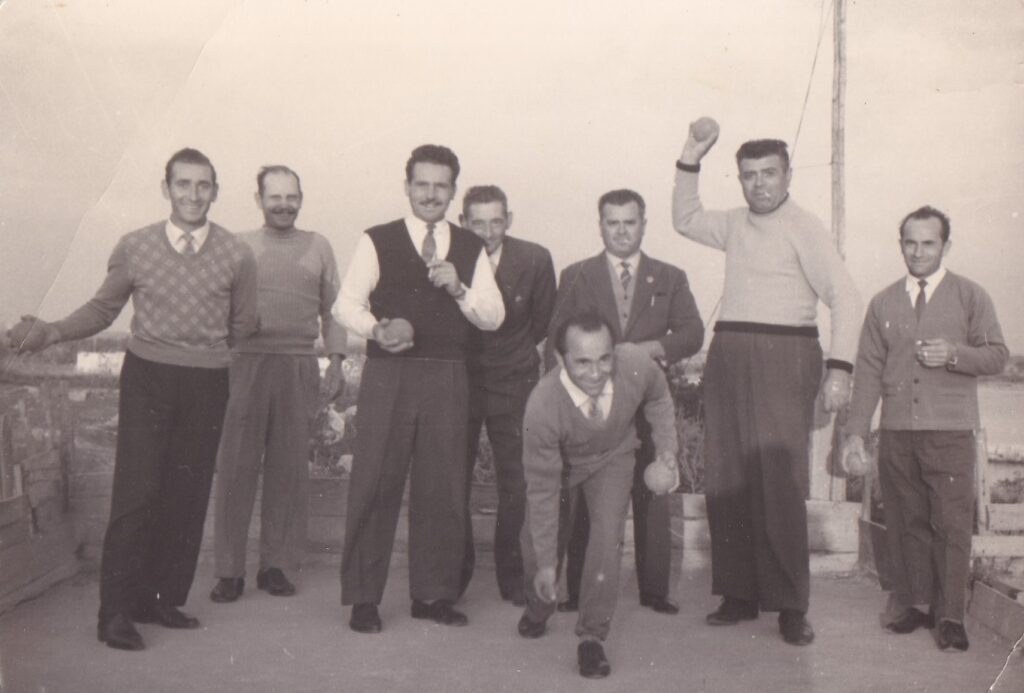
Watching a game of bowls or attending the Saturday evening celebrations at the workers’ recreational club gave the impression of still being on the banks of the River Po.
The Primary School and the Foundation of Fertilia
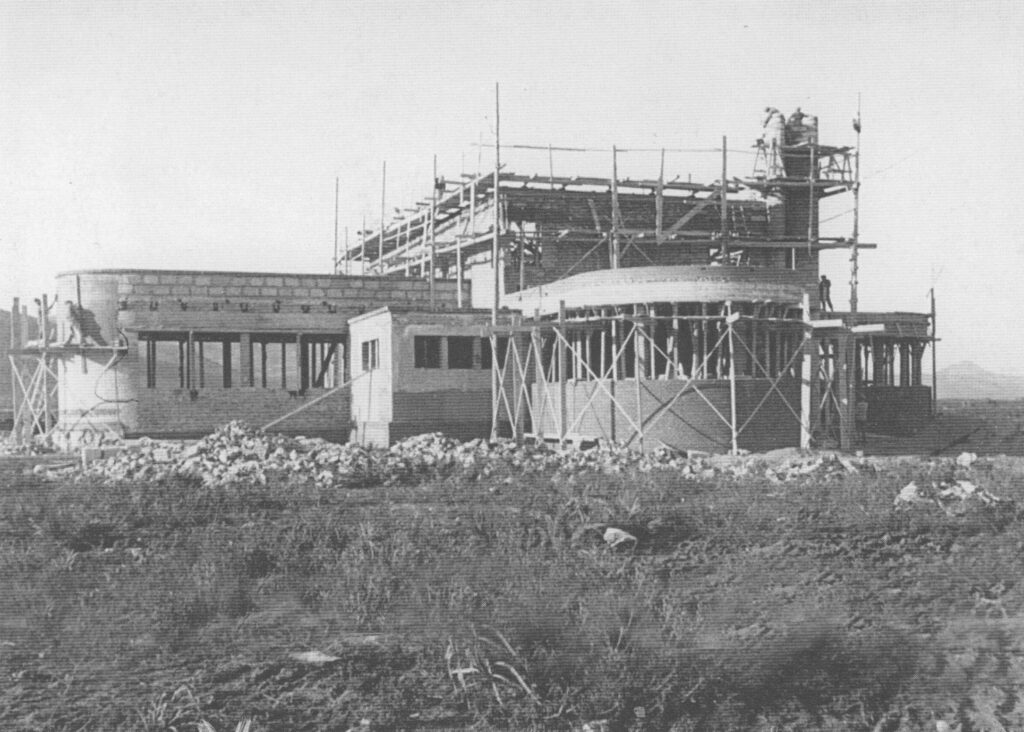
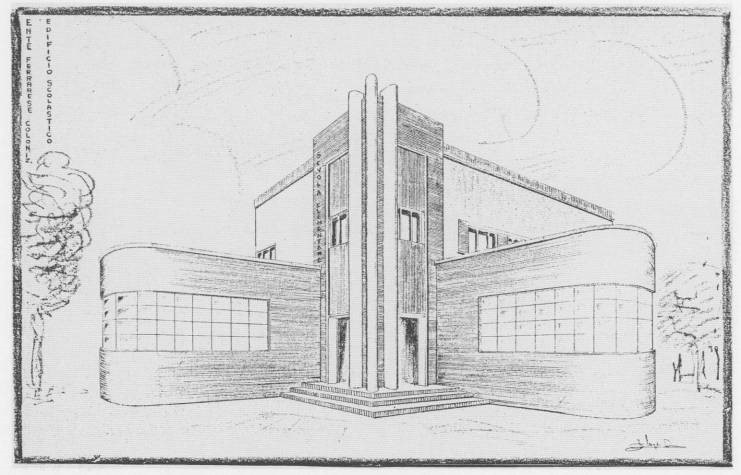
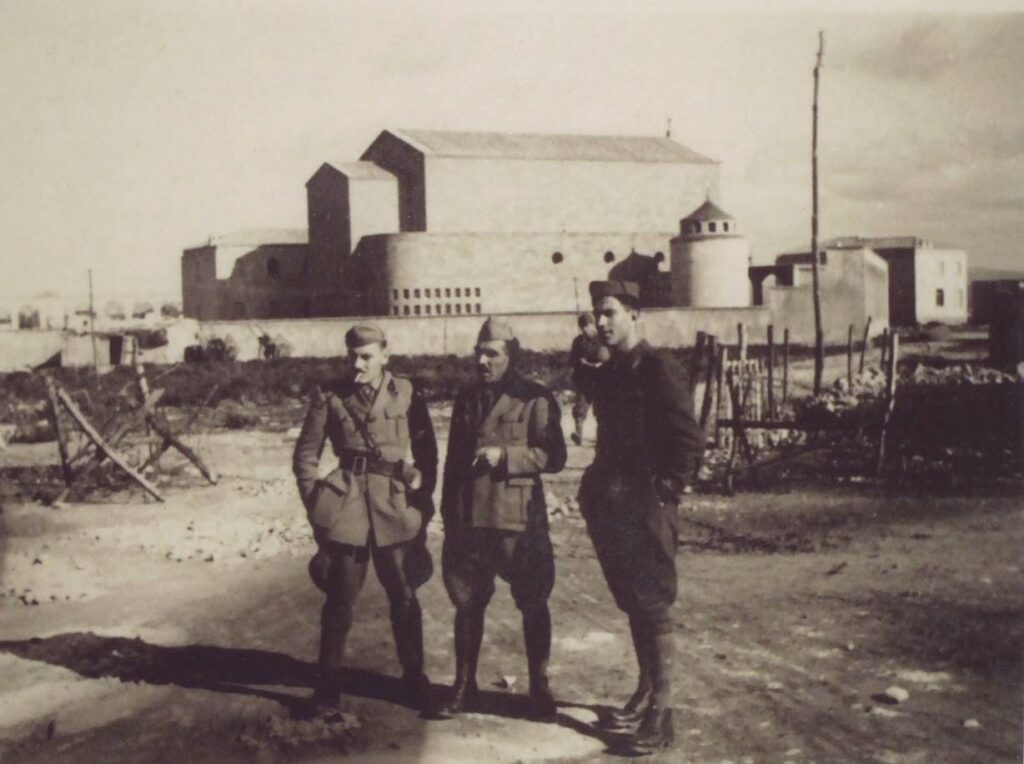
The construction of Fertilia began with the building of the primary school, which was designed with a large terrace from which the official foundation of the new planned town could be proclaimed.
The building, designed by engineer Arturo Miraglia, was completed in only 40 days. The intention was for Fertilia’s foundation stone to be laid on 8 March 1936, International Women’s Day and a symbol of fertility.
Over the years, the building would take on an extremely important role.
After a period of abandonment, it initially became a refugee camp, accommodating dozens of families of Julian-Dalmatian exiles. From 1948 onwards, it became the school attended by many young people from the multicultural community that has always characterised Fertilia.
Sardinians, people from Alghero, Venetians, people from Ferrara, Istrians, people from Fiume and Dalmatia, and Italian returnees from Corsica, Rhodes, Romania, Libya, Ethiopia and Eritrea all grew up together in its classrooms, without distinction.
The building can be considered a true monument to twentieth-century Rationalist architecture.
Fertilia’s Urban Planning Projects
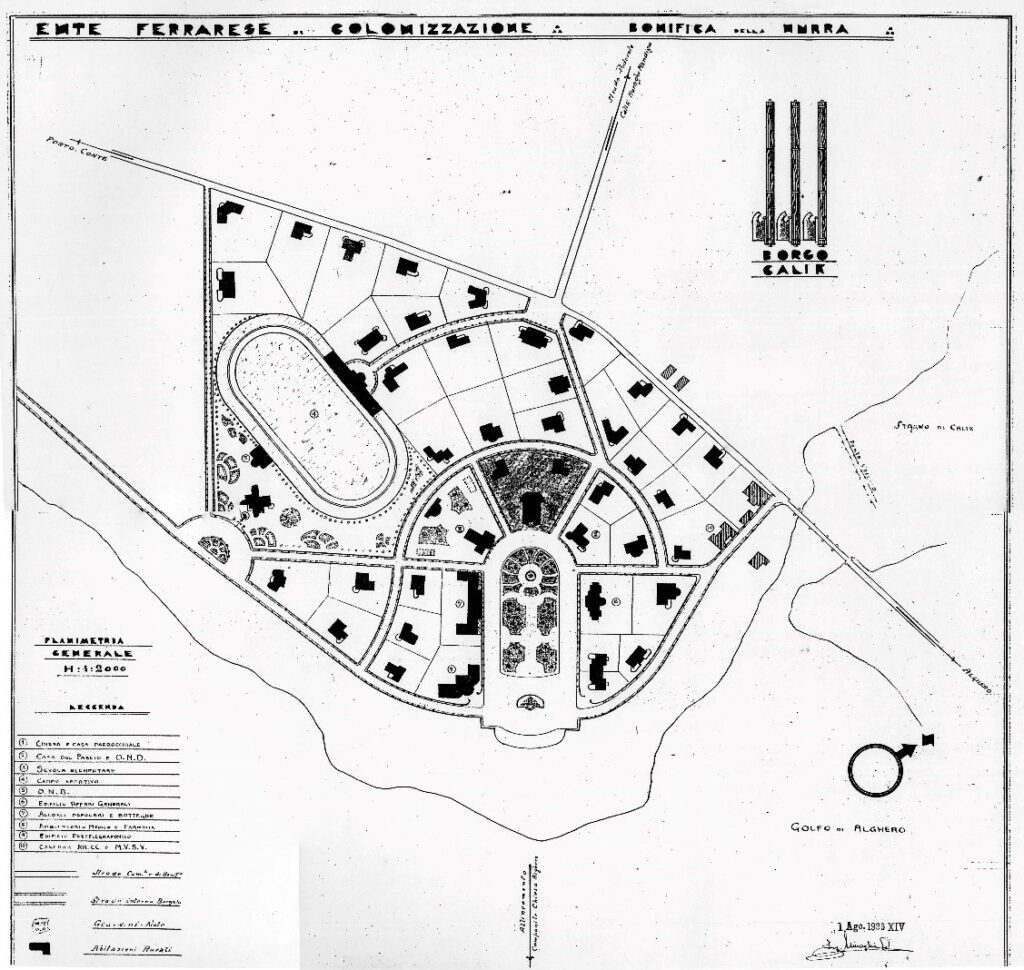
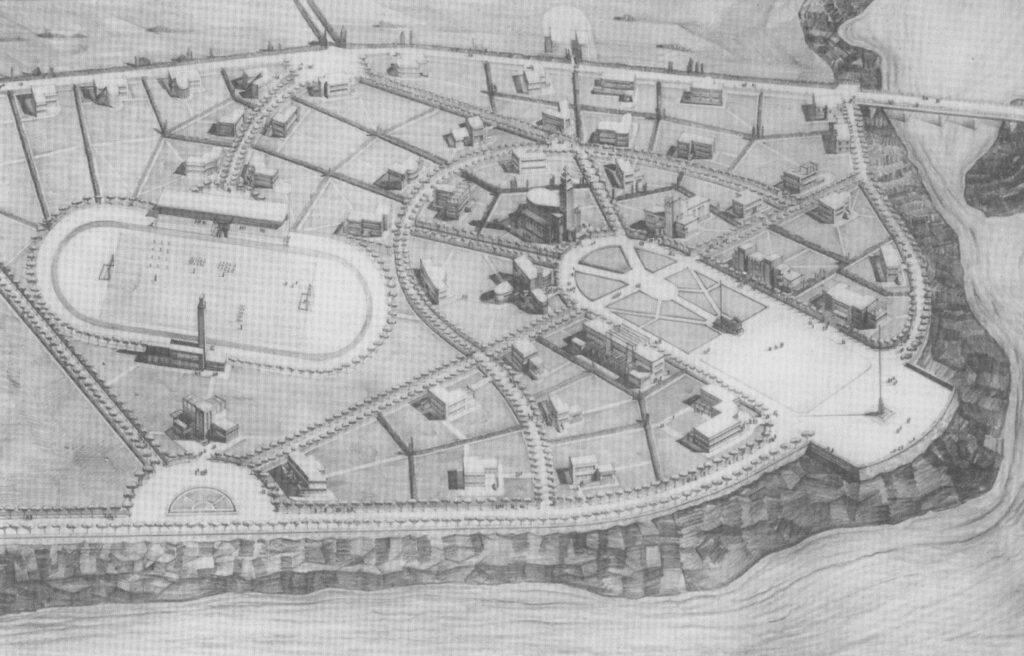
Engineer Arturo Miraglia’s design was inspired by the garden-city movement that was widespread across Europe at the time. It envisaged monumental buildings set within large green spaces intended to enhance their beauty.
According to historical accounts, Mario Ascione abandoned the project because it was considered too expensive.
It was replaced by a new plan developed by the 2PST group, formed by Paolini, Petrucci, Silenzi and Tufaroli, who had already designed the towns of Aprilia and Pomezia in the Pontine Marshes.
Instead of reinforced concrete, the new plan involved the use of local stone, with trachyte inserts and public buildings decorated with travertine.
The general layout and much of the original road network were retained, including the large square overlooking the sea.
In the mid-1950s, a monument was erected in the square. The Julian-Dalmatian exiles placed the Lion of Saint Mark upon it as a symbol of the identity of the peoples of the Upper Adriatic.
The Laying of the Foundation Stone
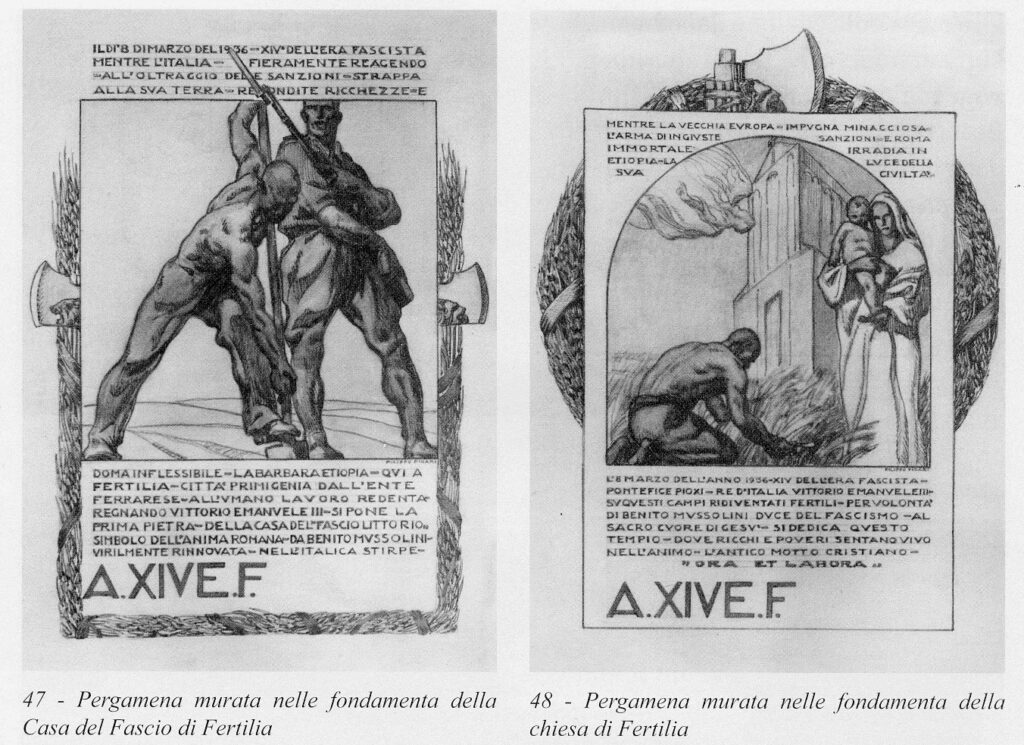
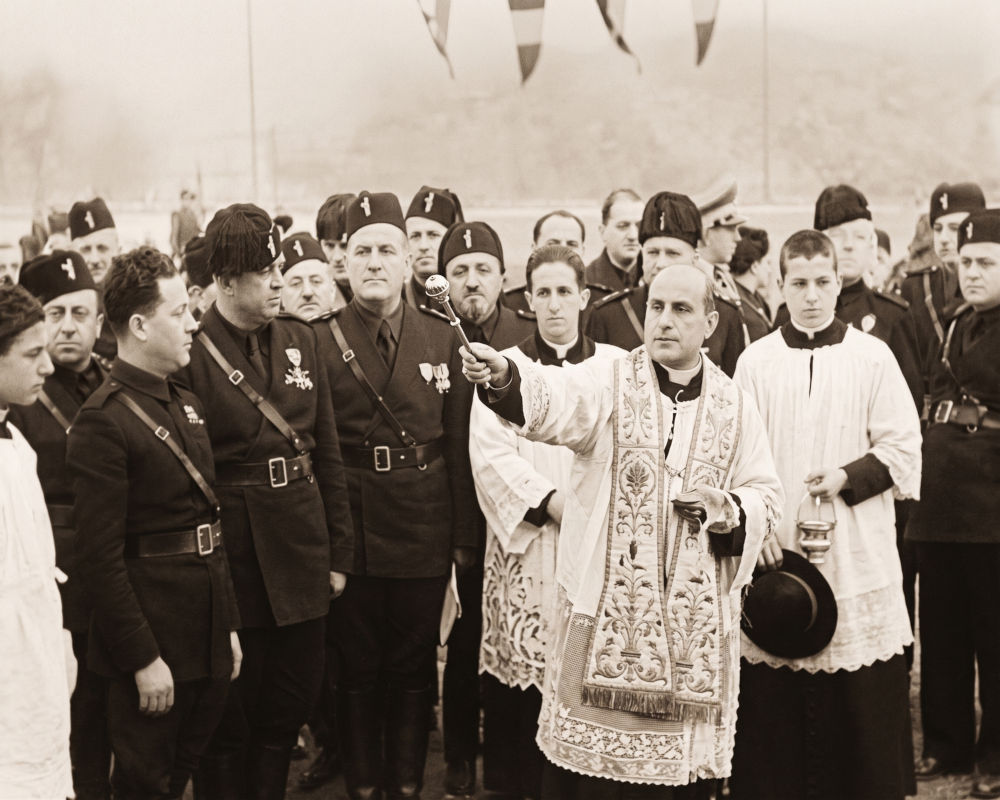
On 8 March 1936, the official ceremony for the laying of Fertilia’s foundation stone was celebrated with great emphasis.
Those attending included Undersecretary for Comprehensive Land Reclamation Canelli and Mario Ascione, the leading figure behind the reclamation of the Nurra area around Alghero and the principal promoter of Fertilia’s construction.
Two parchments were sealed into the foundations of the symbolic buildings of the new town: the parish church and the Casa del Fascio.
The latter was intended to become the town hall of the Municipality of Fertilia. However, Fertilia was never officially recognised as a municipality because construction work was interrupted by the outbreak of the Second World War.
Initially conceived as a service centre for the entire reclaimed area, Fertilia soon underwent a change in purpose and became closely connected to the military airport inaugurated in 1938.
Life on the Farms of the Nurra
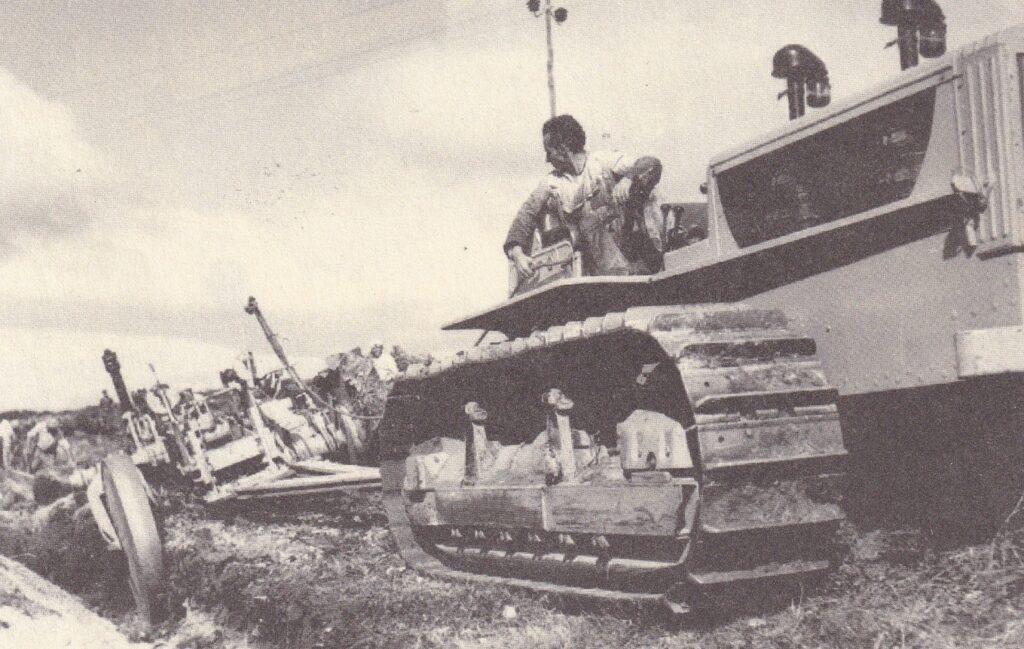
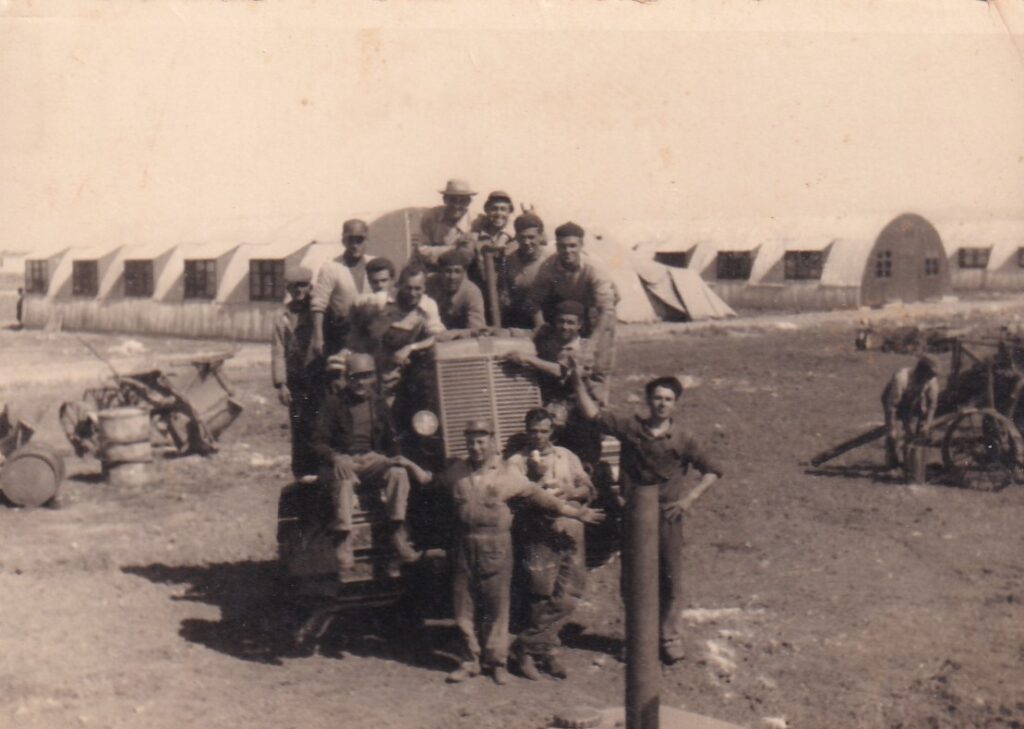
The reclamation of the Nurra was carried out by the Ferrarese Colonisation Authority and covered a large area equipped with roads and agricultural estates.
The estates included farmhouses built according to carefully considered designs that respected the dignity of the families who were to live in them.
The settler was required to reside permanently on the farm with every member of his family. He was not permitted to rent out homes, land or parts of the estate to anyone outside the family.
He was also expected to cultivate the land with the care of a good family man and to carry out the instructions of the Ferrarese Colonisation Authority intelligently and diligently.
He had to devote both his own labour and that of every able-bodied family member, male or female, to the farm.
He was required to care for the livestock according to proper standards of feeding and hygiene, perform all the necessary agricultural work, and oversee the harvesting and storage of produce until it was delivered.
He was also expected to maintain order and cleanliness in the house, the stable and the adjoining buildings, and to supervise and protect the entire estate with care.
The Birth of the Airport
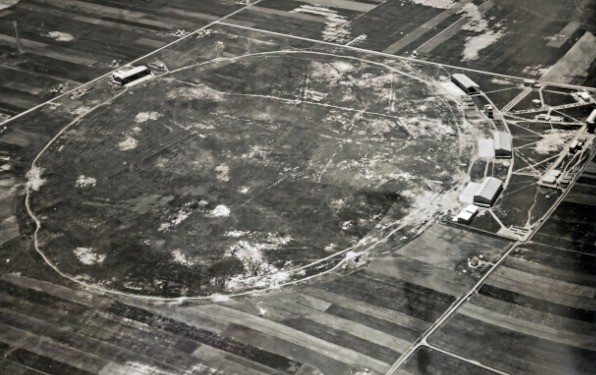
The outbreak of the Spanish Civil War made it necessary to build an airport where aircraft travelling to the Iberian Peninsula could refuel.
Initially, an unpaved airfield with a flattened elliptical shape was constructed. Its outline can still be recognised in aerial photographs.
There was no actual runway: aircraft took off and landed according to the direction indicated by the windsock.
Only at the beginning of the war was a 600-metre compacted-earth runway constructed.
After the conflict, a concrete runway was built. By the 1980s it had reached a length of 2,800 metres, and in 1994 it was extended to its current length of 3,000 metres.
During the same period, its orientation was changed to 02/20 and the connecting taxiways and main taxiway were improved.
The outbreak of the war coincided with the suspension of construction work in Fertilia.
Between the end of 1941 and the first months of 1942, the town was completely abandoned. It remained so until 1947, when the first exiles from Istria arrived and became the leading figures in its rebirth.
The Arrival of the First Exiles
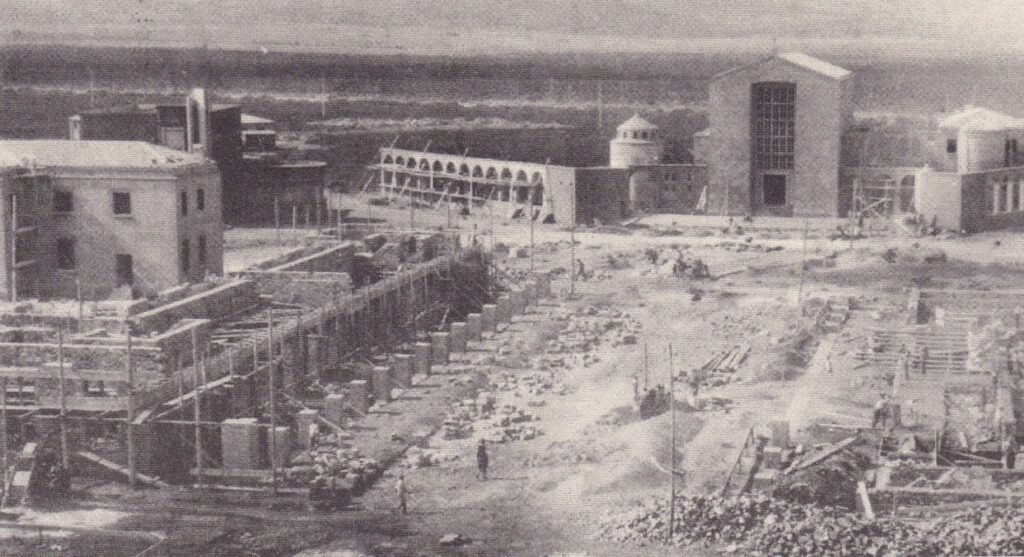
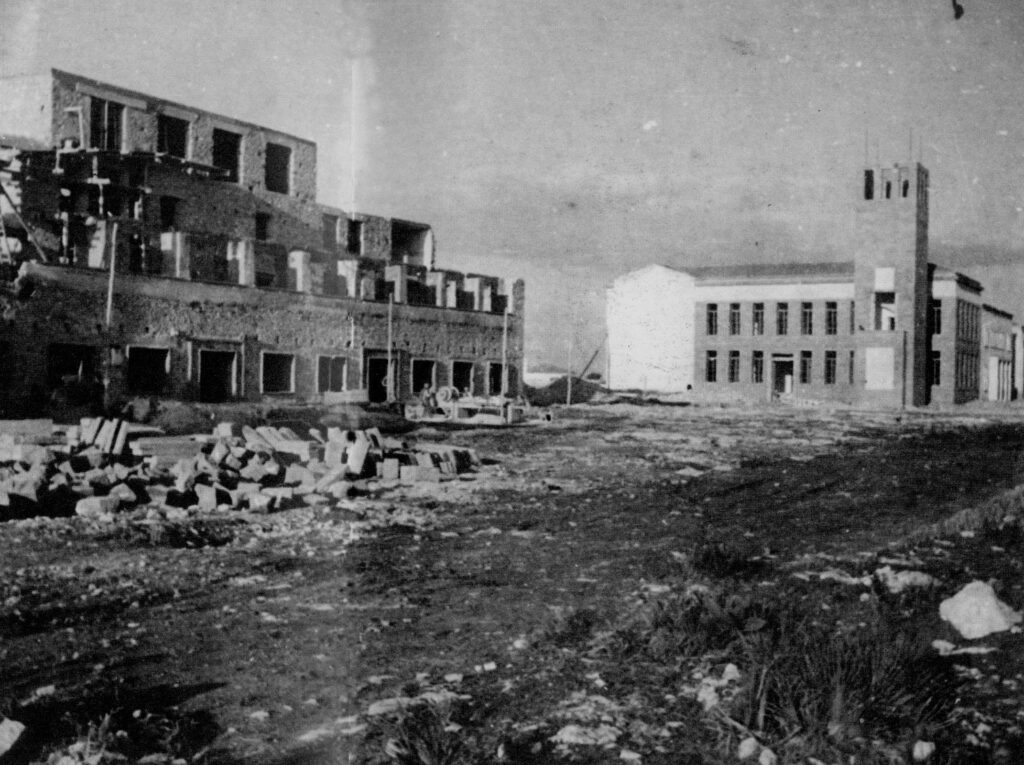
When the first exiles arrived in Fertilia, they did not find a completed town waiting for them, but an open construction site.
Only a few buildings had been completed, while many others were still awaiting completion.
Perimeter walls, barely outlined porticoes, dusty roads and piles of stone characterised the landscape.
The stone had been extracted from limestone beds excavated to create air-raid shelters, which had become compulsory from 1939 onwards.
Fertilia appeared to be an unfulfilled promise, despite its name having inspired hopes of a safe and happy destination after a long exile.
What appeared to be rubble, however, was not the result of war. It was all that remained of a well-begun project waiting to be completed.
Thanks to the strength and determination of women and men hardened by the tragedies of war and internment in refugee camps, work resumed and Fertilia began its second life.
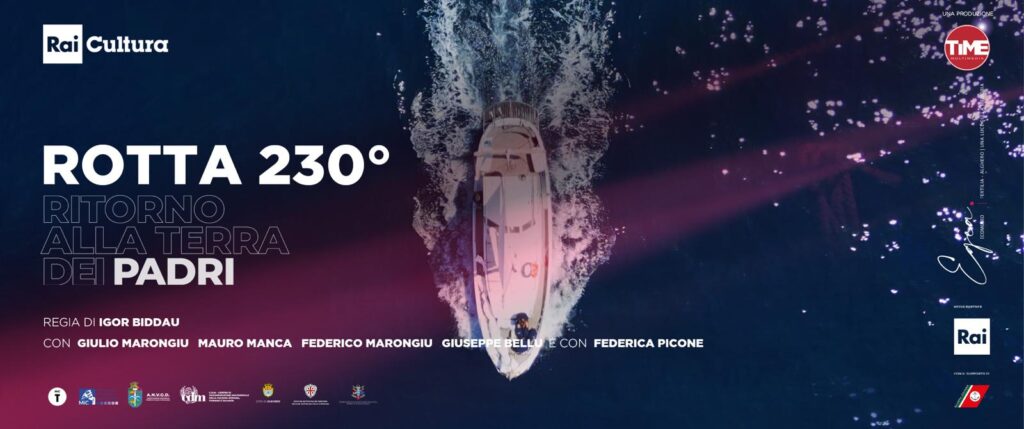
An extraordinary journey back in time, retracing the route sailed by 13 fishing boats carrying 53 families of exiles from Istria, Fiume, and Dalmatia, who reached Fertilia, in Sardinia, after 20 days and 20 nights of navigation along the coasts of our peninsula.
Father Francesco Dapiran
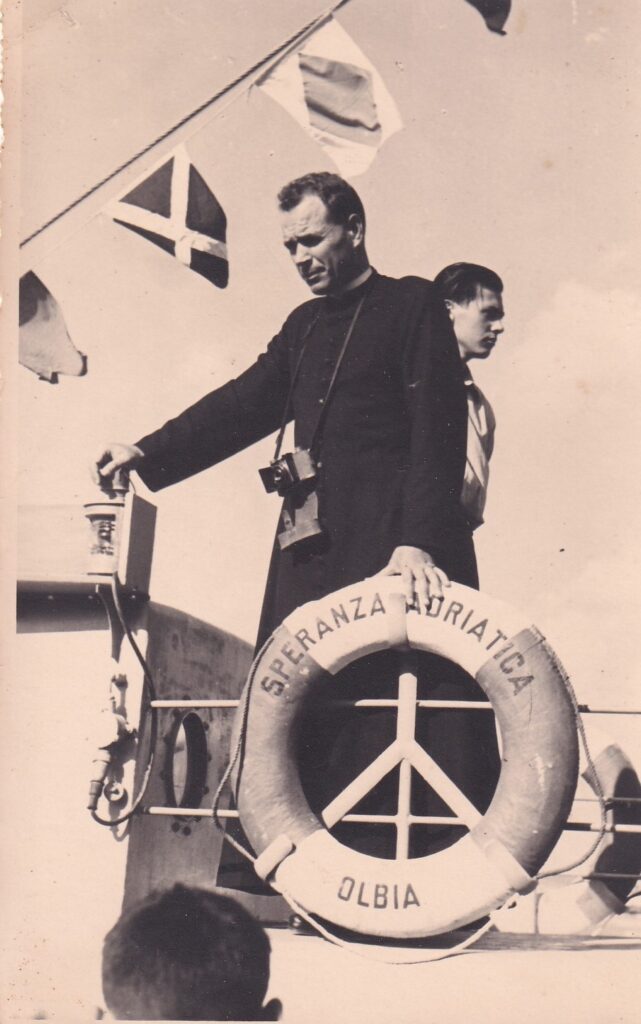
Father Francesco Dapiran first arrived in Fertilia in November 1946.
His bishop, Monsignor Raffaele Radossi, sent him there in advance together with a commission of experts.
Their task was to determine whether the unfinished town, which the Member of Parliament Angelo Corsi from Iglesias had brought to the attention of Prime Minister Alcide De Gasperi, might be suitable for accommodating part of the Julian-Dalmatian community.
“If completed, it could be given to the exiles,” the Sardinian politician had told the prime minister, who immediately ordered an inspection.
The commission’s report was favourable.
Father Francesco was deeply impressed by the rocky coastline and the sun setting over the sea to the west, just as it had along the eastern Adriatic shores that the exiles had left behind.
He immediately began contacting his fellow countrymen in the refugee camps, hoping to build a new Pola where they could begin a new life far from their native towns, which had disappeared from the map of Italy.
A Multicultural Community
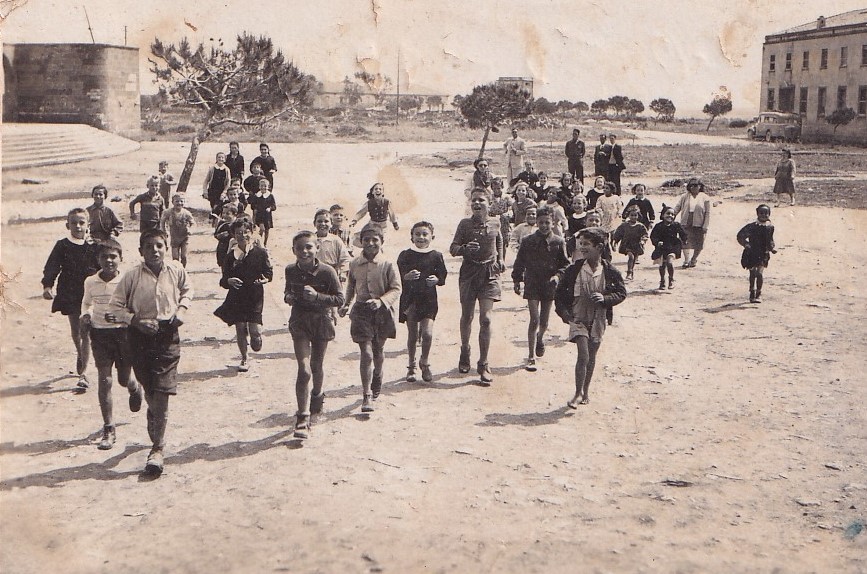
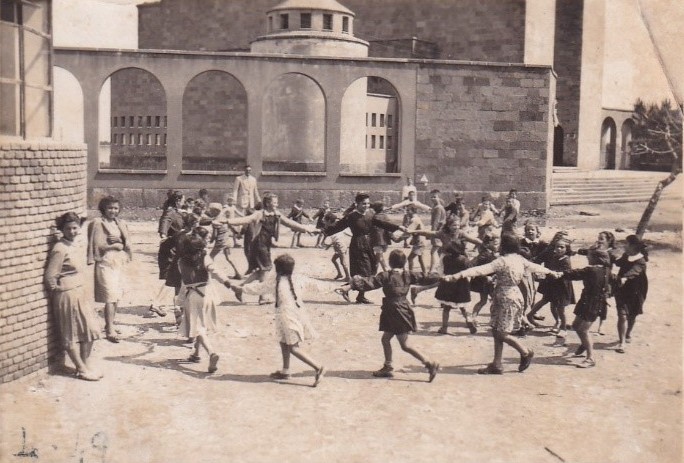
For young people, Fertilia was a joyful and wonderful place where there were no differences of origin or social background.
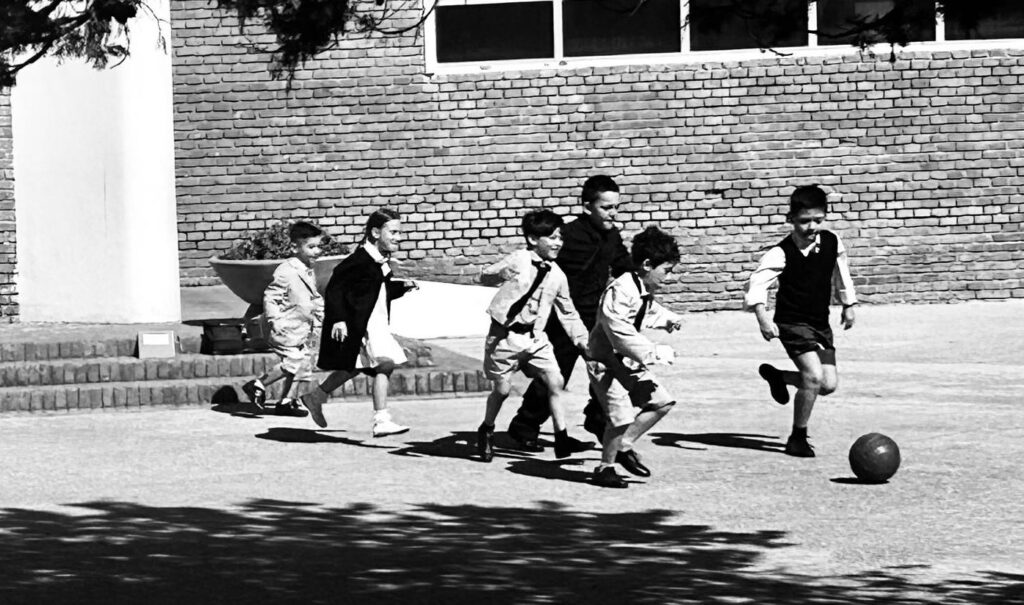
Children from the Julian territories played and studied alongside children from the Polesine area, Sardinians, people from Alghero and the children of the many Air Force families who had arrived from different regions of Italy.
That happiness and carefree spirit were also made possible by the silence of the adults, who chose to forget the past so that their children could grow up without carrying the burden of the tragedies they themselves had experienced.
Entire generations grew up in a multicultural and inclusive environment, where a strong sense of community developed and became one of the defining features of Fertilia and the reclaimed territory.
The children of the exiles were able to grow up without the fences and armed guards that their parents had encountered in the 109 refugee camps scattered throughout the various regions of Italy following the painful abandonment of their homes.
Fertilia’s Bell
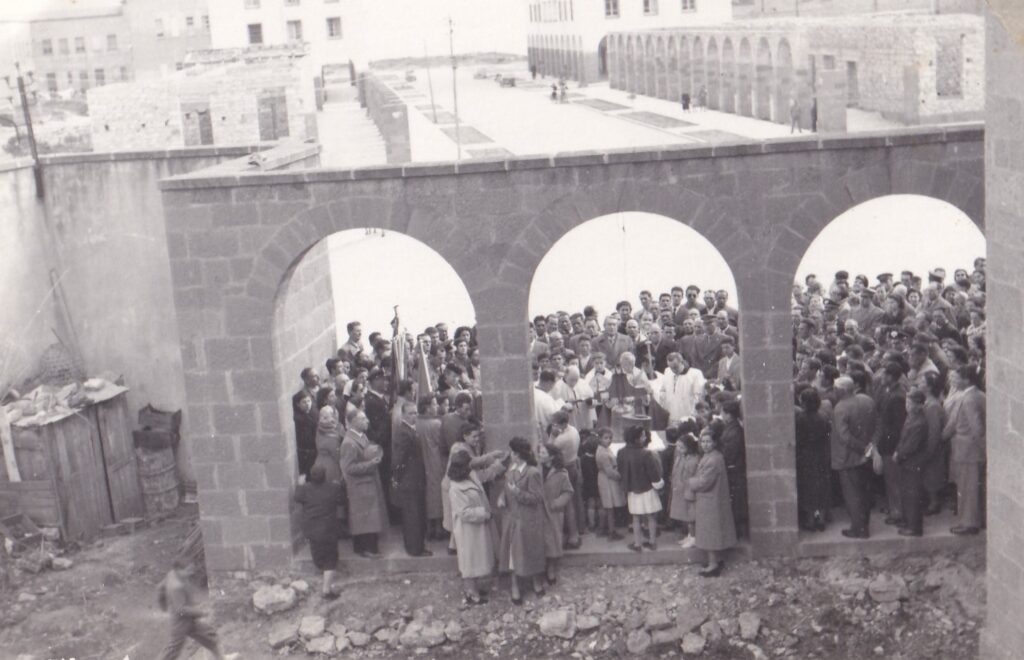
Year after year, the community grew together with the town.
Life in Fertilia passed peacefully as homes gradually filled with families, businesses began to open and young people became adults.
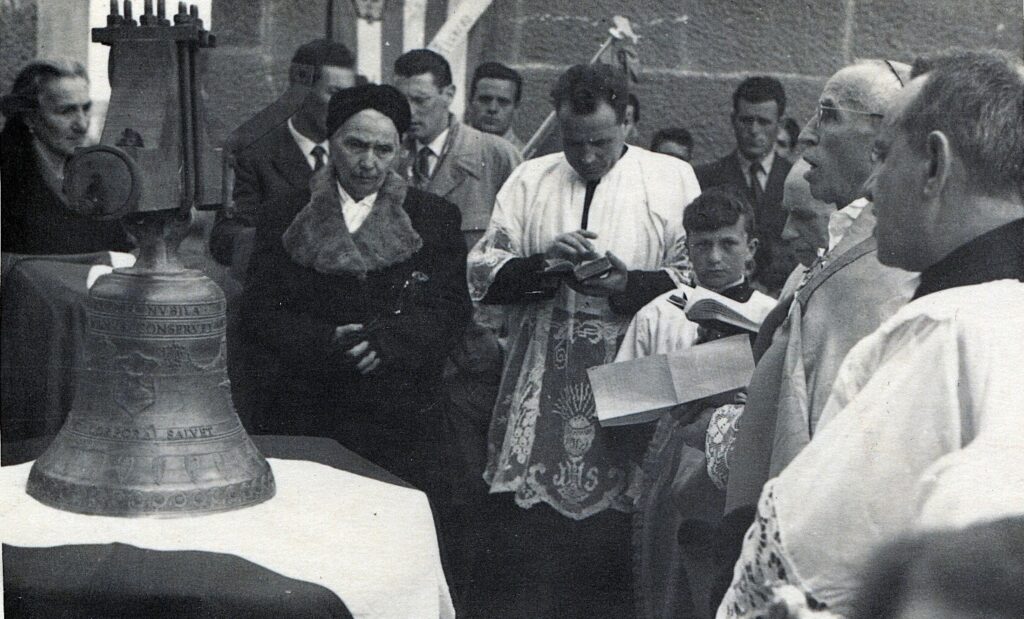
It was not until 1952 that the sound of a real church bell was heard, even before the bell tower itself had been constructed.
Father Francesco had managed to purchase the bell for 100,000 lire, thanks to donations from the faithful and from several friends across Italy.
The emblems of Istria, Fiume and Dalmatia were engraved on the bell in memory of the long journey undertaken by the approximately 1,500 exiles who had chosen Fertilia as their final destination.
Before the bell arrived, a large metal container made from a truck gearbox was used to call the faithful to Mass.
It was suspended from a pine tree growing in the middle of the square, directly opposite the churchyard.
The Growth of the Town
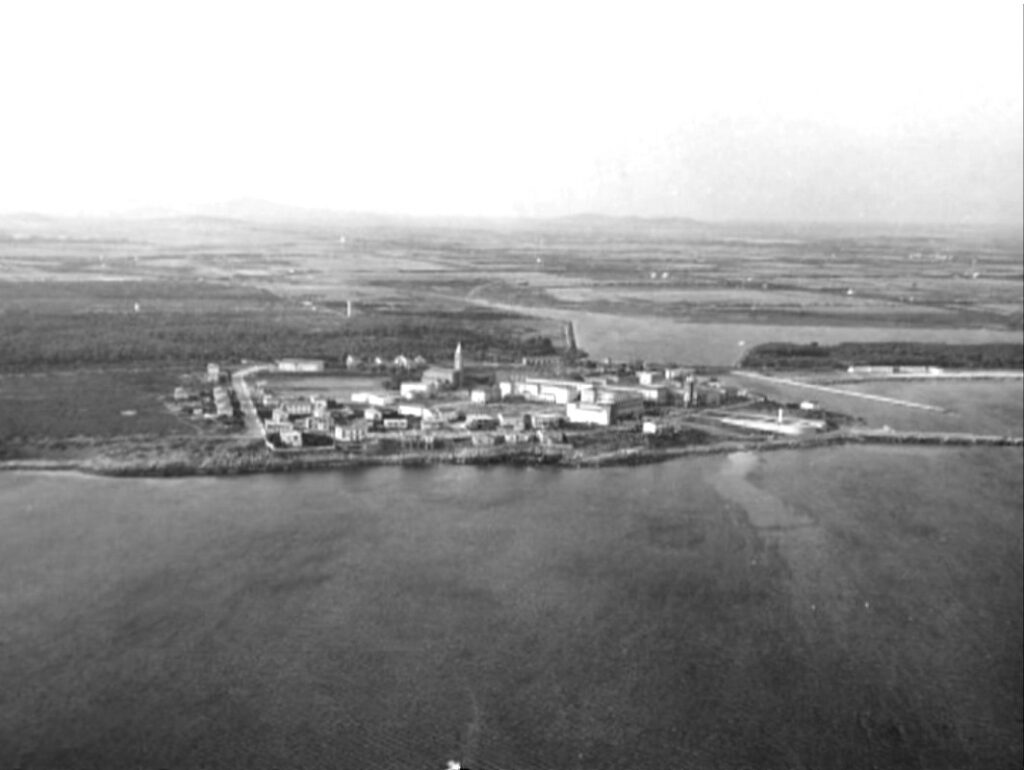
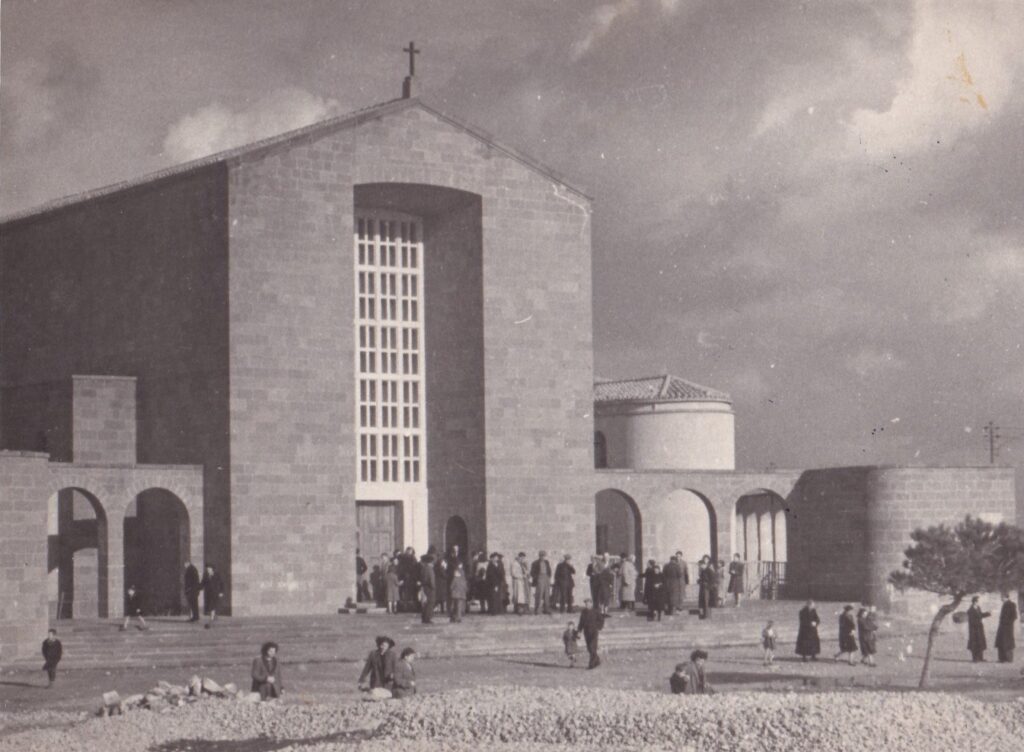
Fertilia gradually began to take shape, as did the reclaimed territory, which had become fertile and productive thanks to the work of many families.
The town itself acquired a clearer identity, and the church became the place where the community gathered for its most important occasions.
Seen from above, the small Julian town in Sardinia opened out towards the surrounding landscape through a road system that now reached every corner of the Nurra.
It also faced the sea, rich in fish but full of dangers, which offered new opportunities to the many fishermen who had arrived with their boats from the Upper Adriatic.
The church dedicated to Saint Mark was preparing to receive its tall bell tower, which was intended to be visible from the reclaimed fields, at that time completely devoid of trees, and to summon the entire community during religious celebrations.
The Architecture of Fertilia
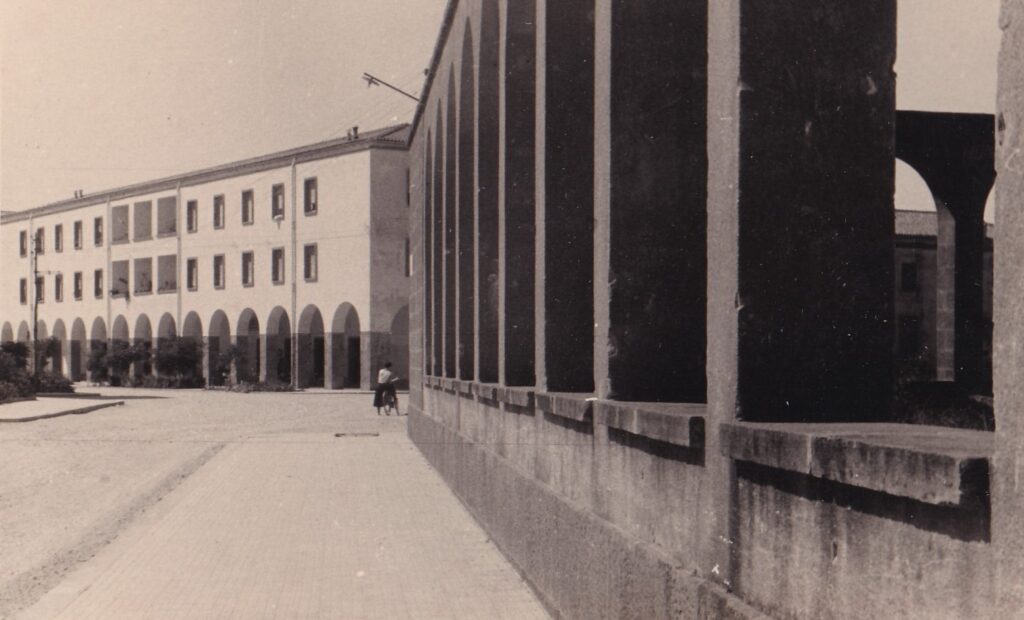
The town had a metaphysical atmosphere, reminiscent of a painting by Giorgio de Chirico.
The colonnades created an austere and symmetrical setting around a large square that extended from the churchyard to Piazza San Marco.
A few years later, the monument bearing the Lion of Saint Mark would be placed there as a symbol of the community’s Adriatic identity.
The linearity of the architecture gives Fertilia a solemn and restrained character.
Trachyte, a local stone extracted from quarries near Ittiri, was also used as a decorative feature on the buildings.
The perimeter walls, meanwhile, were constructed using limestone extracted directly from the ground on which the town had been built.
The cement was mixed with sea sand taken from the so-called Visconti quarry, now known as Punta Negra beach.
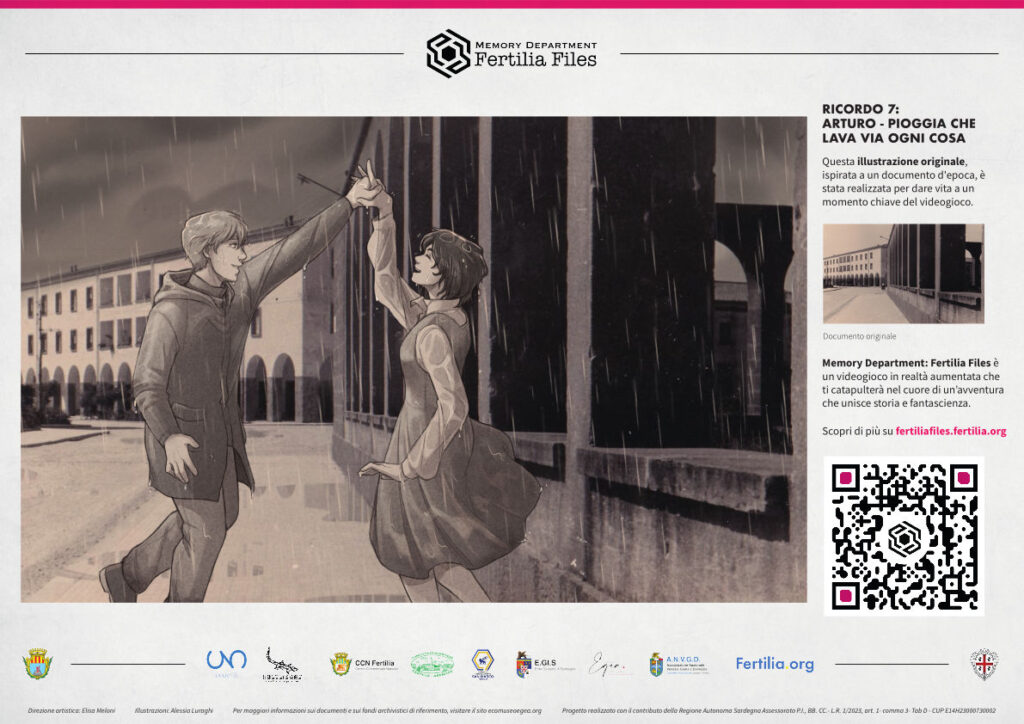
The video game Fertilia Files, created to introduce younger generations to the history of Fertilia through play, drew inspiration from these distinctive architectural elements, which help make Fertilia an ideal town.
The UNRRA-CASAS Apartment Buildings
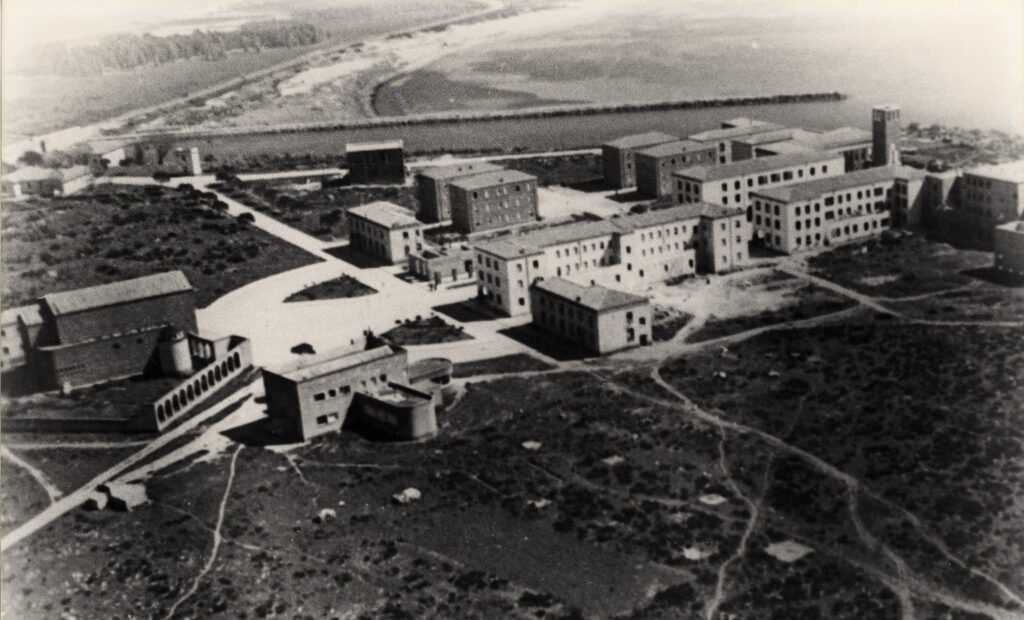
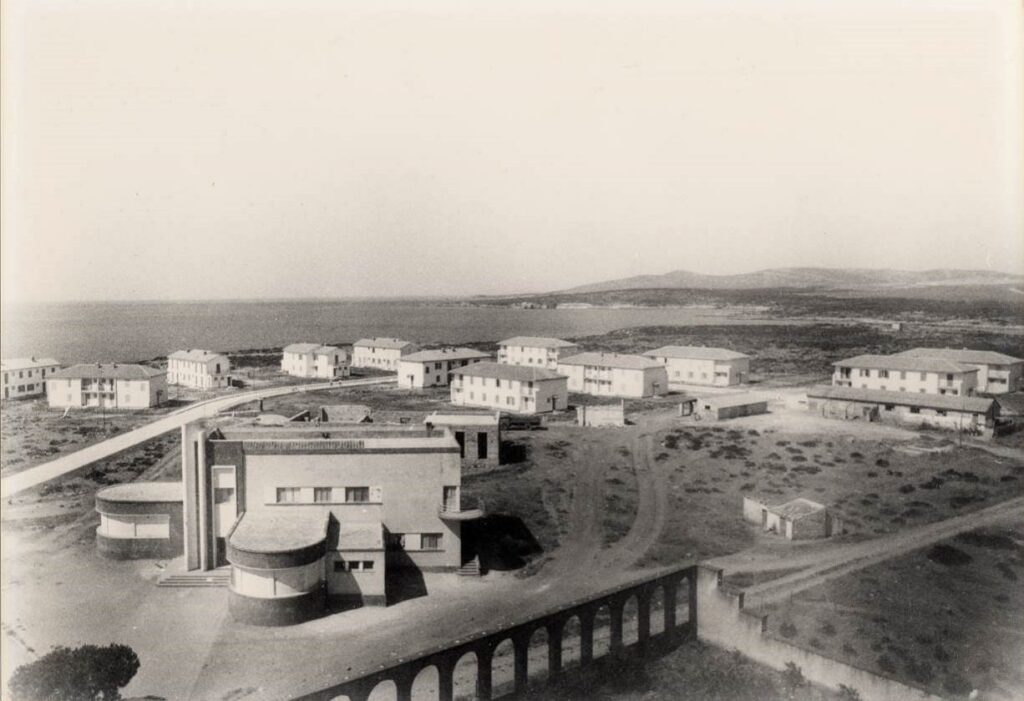
Seen from above in a photograph taken in the early 1950s, Fertilia displayed its restrained architectural lines.
The apartment buildings along Via Cherso had already been completed, while the church bell tower had not yet been constructed.
The fourth building on Via Pola, on the side facing the Carabinieri barracks, had also not been completed.
Apart from these structures, almost nothing else existed, with the exception of the Calik Village buildings erected in 1927 and the covered market located behind the church.
Beginning in 1952, twelve UNRRA-CASAS apartment buildings were constructed with funds provided through the Marshall Plan.
The apartments were offered under a rent-to-own arrangement to those willing to pay an amount that, particularly in the early years, represented a considerable financial burden for many families.
Each building contained four apartments, each with its own independent entrance and a small garden.
This building project offered an effective response to the housing needs of the community without altering the character of the town.
It was very different from the large-scale social housing complexes that would be built many years later.
The First Families of Exiles
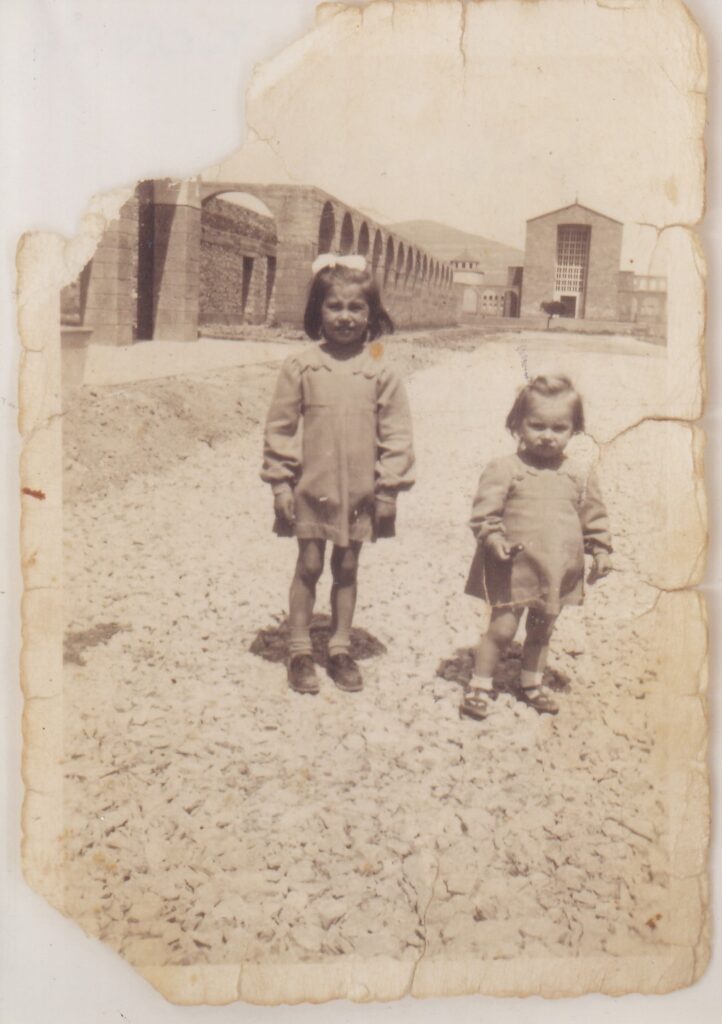
The first families to arrive in Fertilia from Istria, Fiume and Dalmatia found a town that still needed to be completed before it could finally become their new home.
Women were the heart of this new community.
They had to raise their children without passing on the burden of the tragedy they themselves had endured through the exodus and their long stay in refugee camps.
Marisa Brugna, an Istrian exile, left her home in Vrsar at the age of six aboard a fishing boat.
From the quayside, she said goodbye to her grandmother, whom she would never see again.
She later recalled that the first time she was able to protect her privacy by locking a bathroom door was in Fertilia, on her seventeenth birthday, after more than ten years and four months spent in refugee camps.
Fertilia restored a normal and free life to many families, although they remained far from the places of their birth, which would stay in their hearts forever.
Women and Changing Social Customs
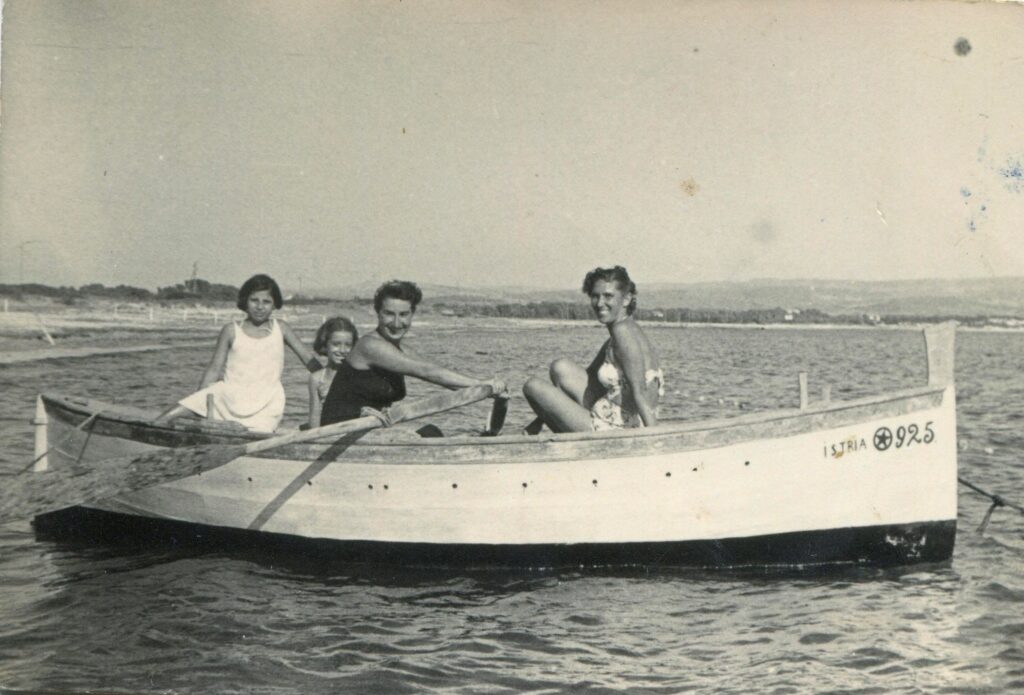
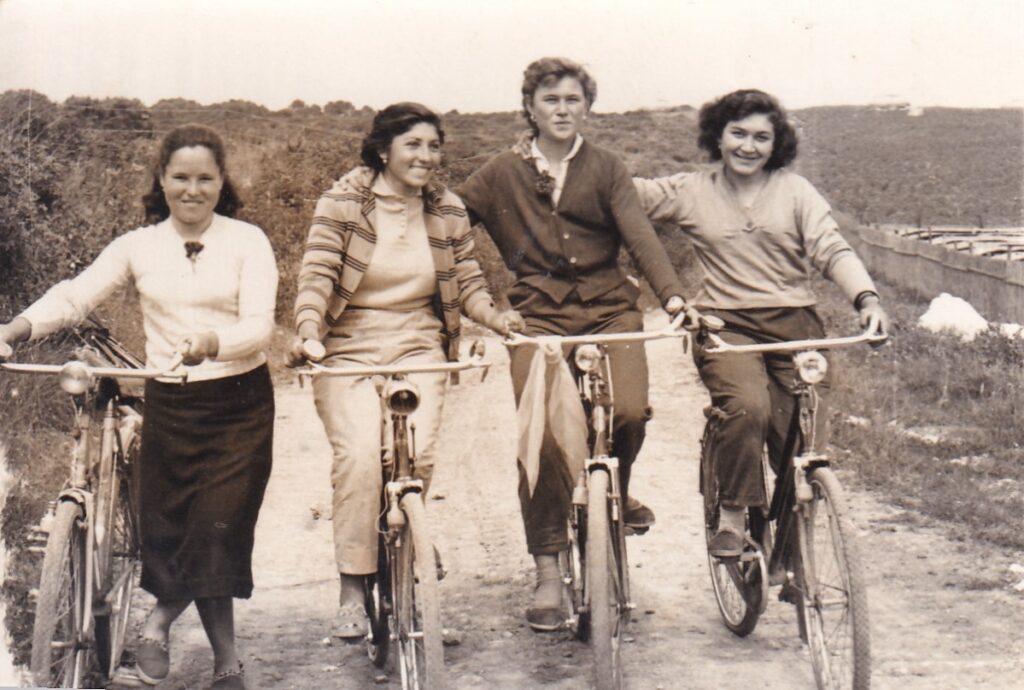
The women of Fertilia attracted attention because of their open and spontaneous attitude.
To Sardinian men, seeing young Istrian, Fiuman or Dalmatian women aboard a boat, smiling and carefree in revealing swimsuits, must have appeared almost like a vision.
For these women, however, enjoying the sea and taking part in sports from a young age was entirely normal and caused no particular reaction in their native lands.
The same was true of the women from Ferrara and the Veneto who rode bicycles, sometimes wearing skirts that revealed their bare legs.
Within the Sardinian culture of the 1940s and 1950s, this was considered genuinely scandalous.
Although women were regarded as central to the management of family life, the strict and austere customs of the period did not allow such freedom.
Beauty, Family and Tradition
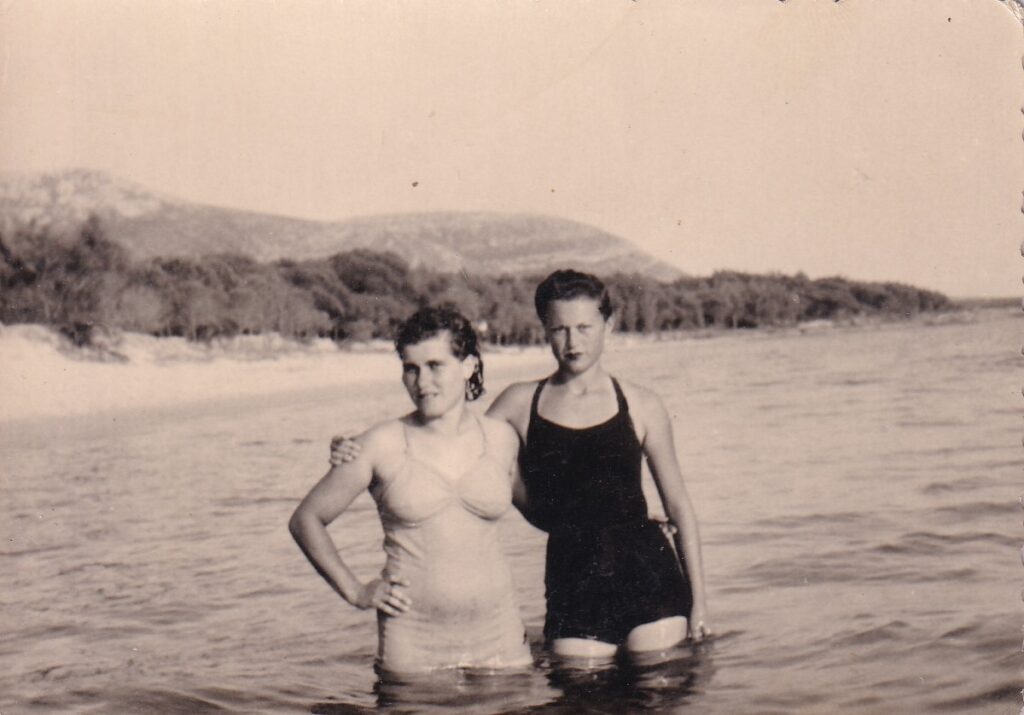
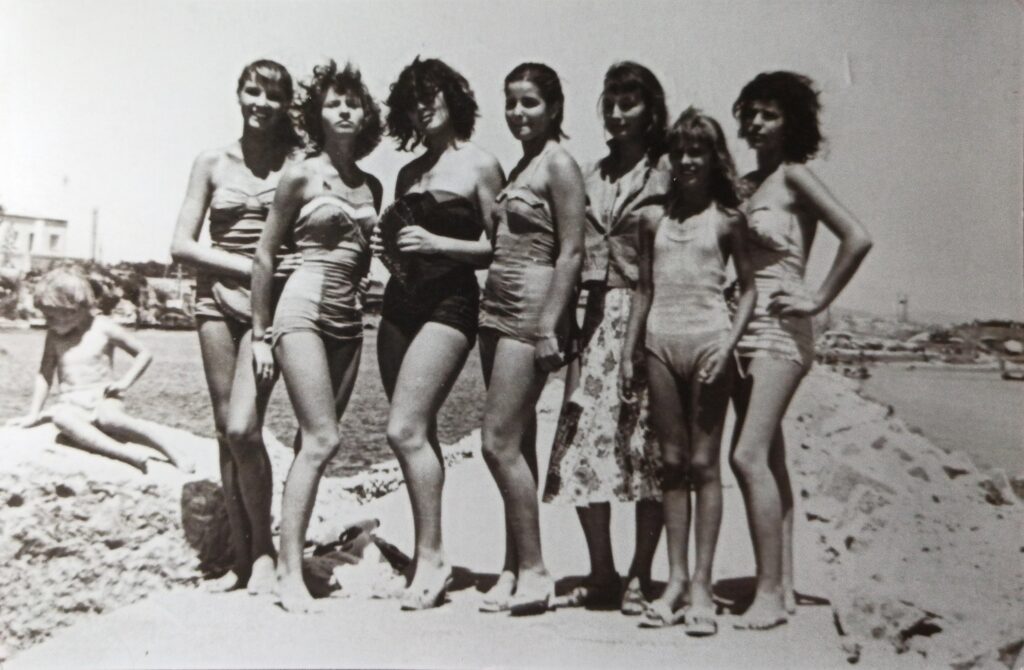
For women from the Adriatic lands, it was normal to go swimming in a swimsuit without hiding their bodies beneath long skirts.
Many were tall and athletic, often with blonde hair and light-coloured eyes.
The Julian, Ferrarese and Venetian women, cheerful, open and playful, attracted the attention of men throughout north-western Sardinia.
They brought with them a wave of beauty and joy from their long journey across the Adriatic lands.
Their freedom and beauty did not prevent them from becoming loving wives and devoted mothers.
They passed on to their children the value of family and kept their traditions alive, including through the typical dishes they had learned from their own mothers.
The Educational Role of Women
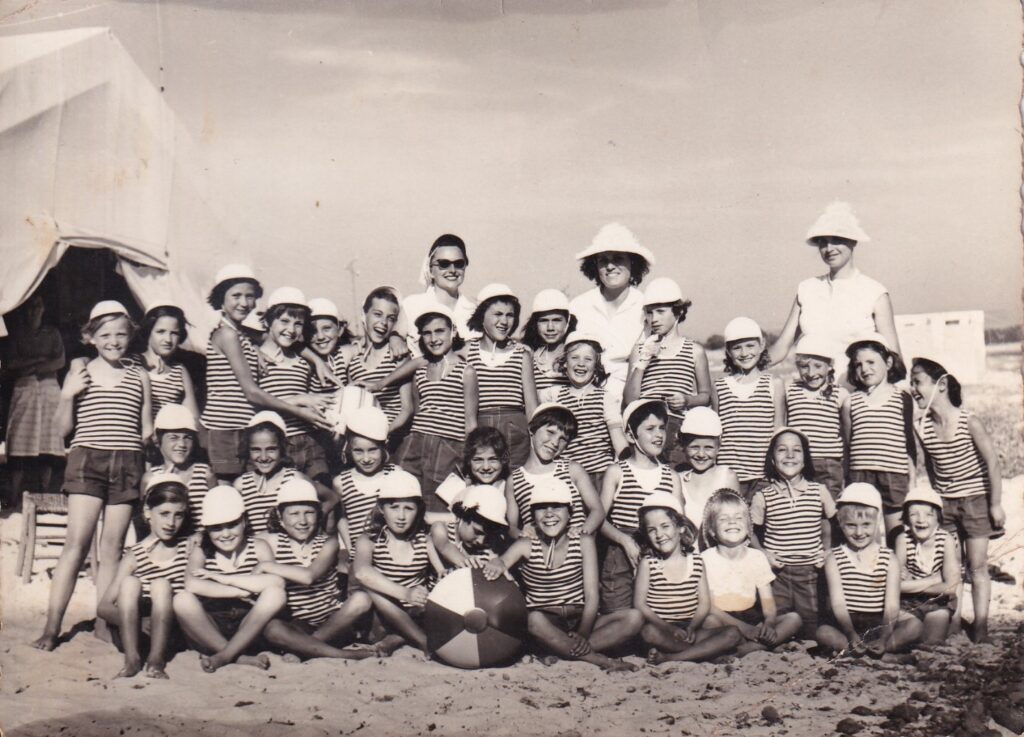
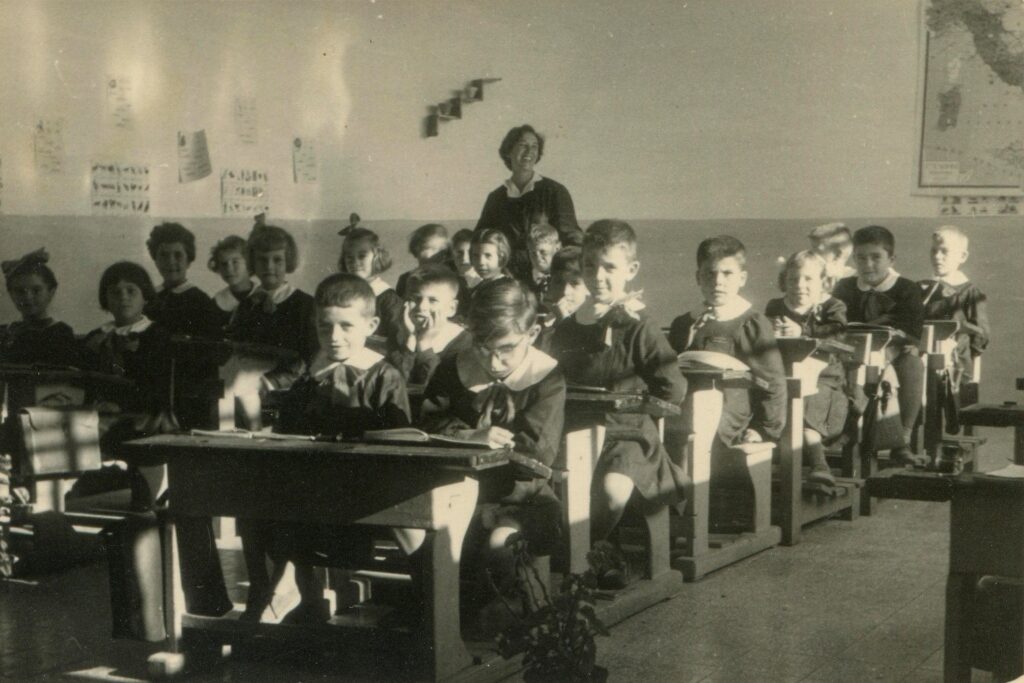
The women of Fertilia always devoted particular attention to the education of young people.
Through their work, they helped pass on the community’s deepest values.
Teachers, primary school educators, governesses and mothers left a profound impression on the young people fortunate enough to meet them during their formative years.
This vocation also led women who did not work professionally as educators to treat young people as though they were their own children.
In this way, they gave real meaning to the idea of the community as one large family.
This value characterised Fertilia and the Nurra area for many years, while the women who had led its rebirth were still alive.
Strong and Tireless Women
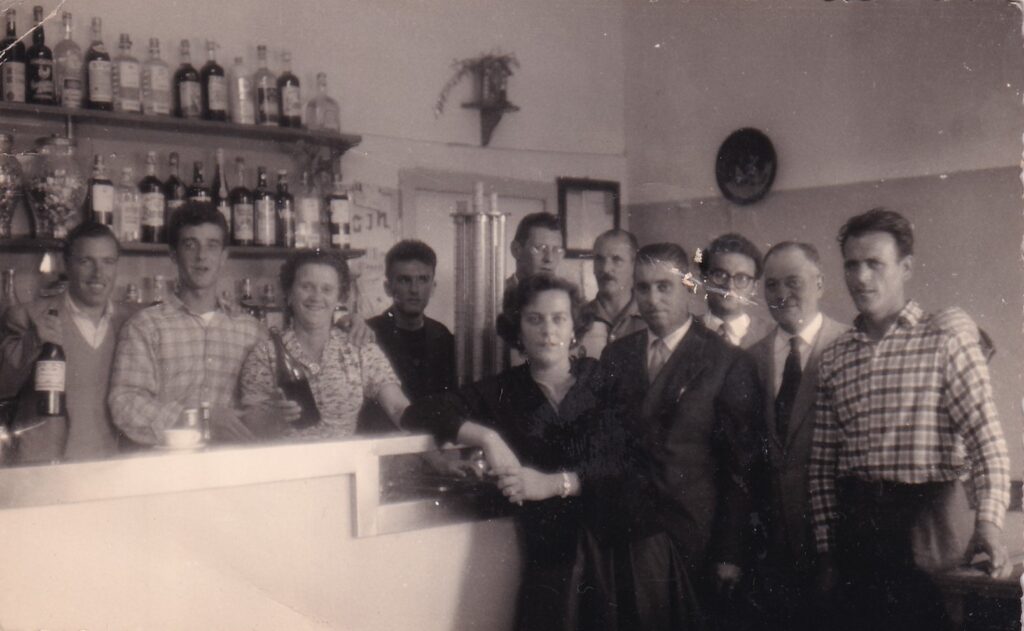
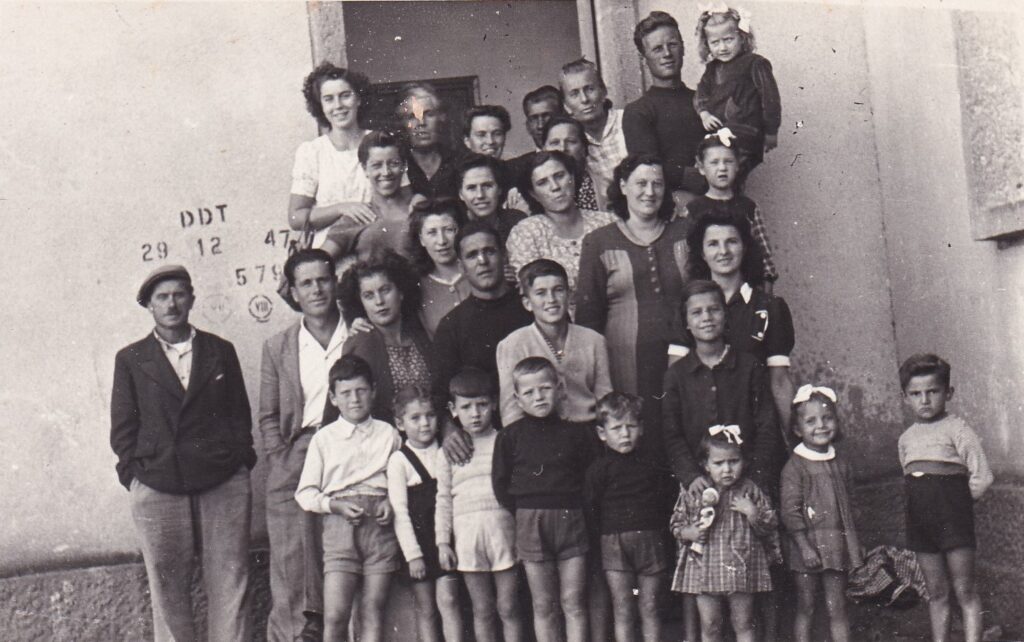
The women of Fertilia were tireless workers and a constant source of support for their families, particularly during the first years after arriving in Sardinia.
The unfamiliar environment confronted them with extremely difficult circumstances.
To contribute to the family income, many combined domestic work with the management of businesses, shops, craft workshops or agricultural activities, while the men worked in the fields or at sea.
A young woman from Ferrara recalled that, only a few months after arriving in Sardinia, her mother appeared strong, determined and smiling during the day.
At night, however, she cried silently and in secret so that no one would hear her.
Life in Fertilia, particularly during the early years, was sustained by these strong and cheerful women.
They gave their children and future generations a peaceful and carefree life, deeply rooted in strong values.
The entire community of Fertilia owes them its gratitude.
Fertilia, a Town of Inclusion
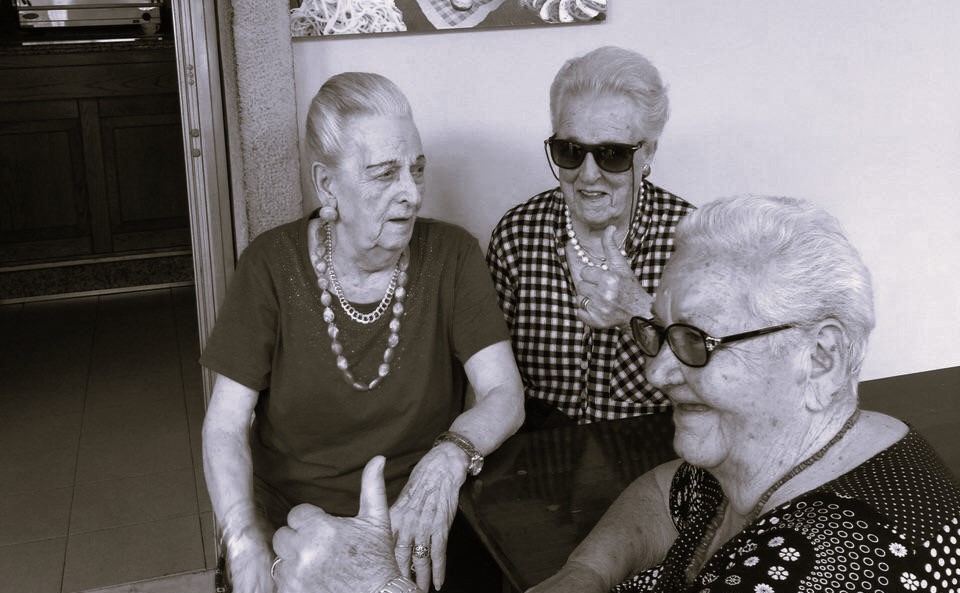
The greatest gift these women gave Fertilia was their natural ability to pass on the value of inclusion.
Edda, an Istrian; Anna, a Tuscan woman repatriated from Corsica and married to a man from Ferrara; and Francesca, a woman from Alghero, spent their free time together without perceiving any difference between them.
They represent one of the most beautiful images of Fertilia, which over time was transformed from a planned town into a town of inclusion.
Even today, the young people of the community carry with them a genetic and cultural heritage that connects the countries of north-eastern Africa, the Adriatic lands and the Sea of Sardinia.
They grow up and play together, cultivating the values passed down by their families.
Sport and the Community
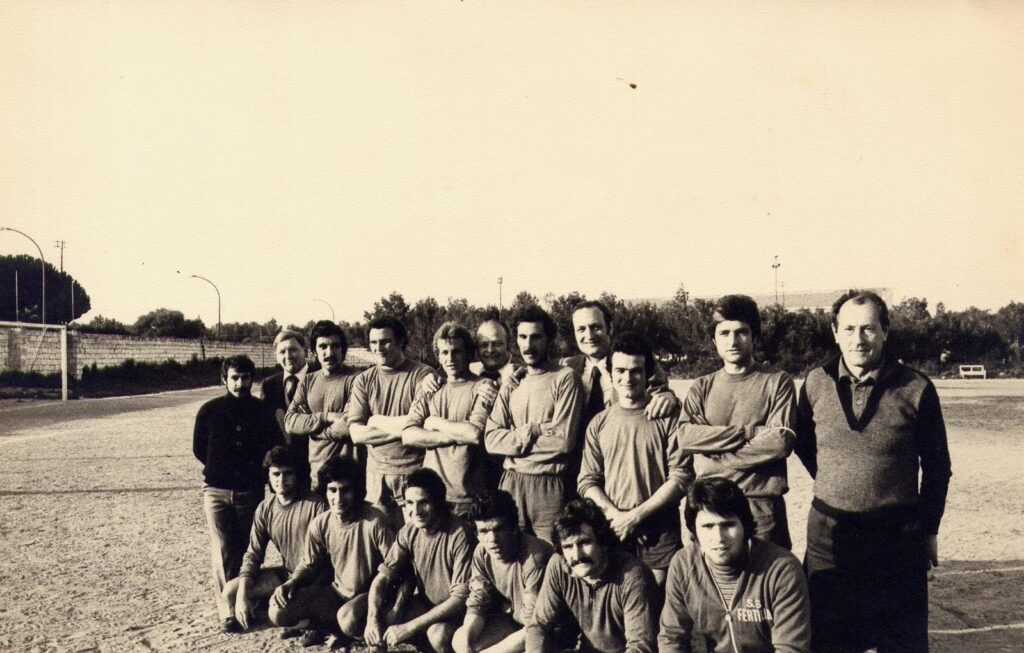
Sport also played an important social role in Fertilia.
It helped represent and unite the community within a healthy environment, also protecting those who might otherwise have struggled to overcome the trauma of their past.
The football team and the game of bowls became the true symbols of Fertilia’s multicultural and multi-ethnic community.
Through sport, the community became known and respected throughout Sardinia for its fairness, sportsmanship and fair play.
Bowls was particularly popular among the Ferrarese community.
Many families built a bowls court on their own farms, creating a travelling tournament that moved from one estate to another.
The main meeting place, however, remained the workers’ recreational club located between Fertilia and the small Church of Sant’Antonio Abate in Arenosu.
Above all, sport was an opportunity to spend time together and strengthen the community during moments of leisure after long weeks of hard work.


